logo
logo

Architectural Design

For over 20 years Michael Singer has collaborated with numerous architects to shape spaces and buildings with a focus on light, shadow, materiality, sustainability and sculptural detailing.

Whole Foods Market Jacksonville

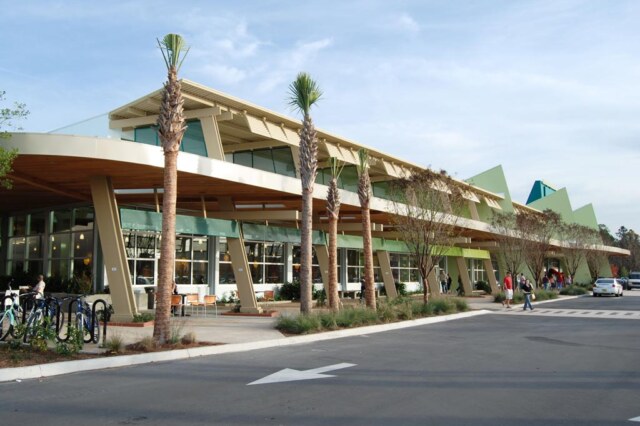
Michael Singer Studio led the architectural design of the exterior of the 50,000 square foot Market and the landscape design for the rehabilitation of the existing shopping center site at Mandarin Landing. The entire west entry façade is designed as an apparatus to capture the strong Florida sun and filter this natural light throughout the interior of the store. To accomplish this, large angled three storey tall fins are placed along the façade to intercept and reflect the light into the recessed tiered levels of glazing. This light capturing strategy, in conjunction with the heavily insulated reflective roof, reduces heat gain and results in less energy used for mechanical systems cooling. There are several other environmental design aspects to the building including awnings, skylights, green walls, rainwater collection for irrigation, naturalized landscaping, reflective paving, and the use of reclaimed wood.

Cohen-Collins House

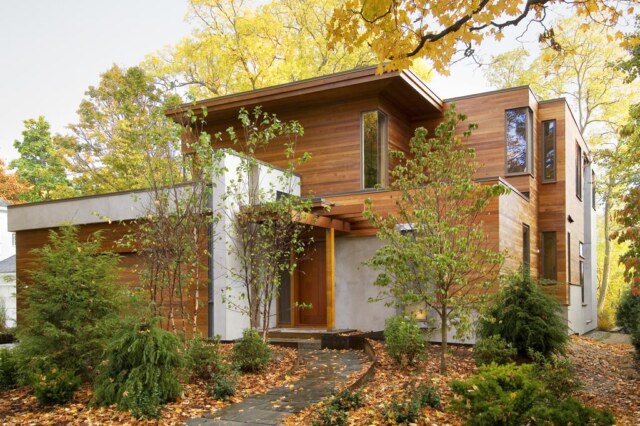
The 5,000 square foot house is a combination of steel and wood construction designed around a central gallery passageway spine extending from the entry to the south deck. The site is located in an in-town neighborhood on a ridge overlooking the Mill River with spectacular views of the Holyoke Range. The new structure is built on an existing foundation that has been modified to accept a cantilever over the hillside. Key guidelines for the project include energy efficiency (passive solar design and geothermal heat exchange for heating and cooling), exposure to light and views, privacy, family oriented spaces and naturalized landscaping.

West Palm Beach Waterfront Pavilion

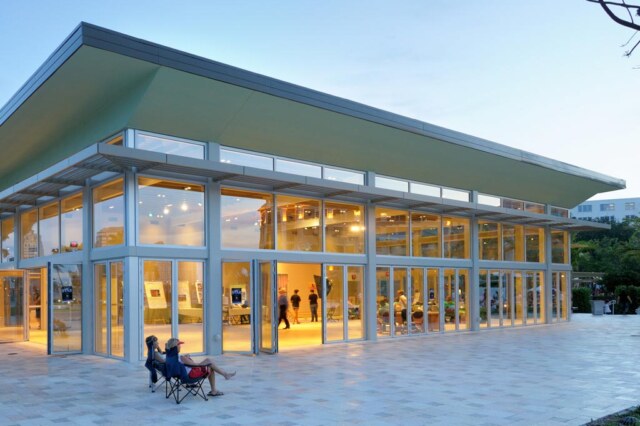
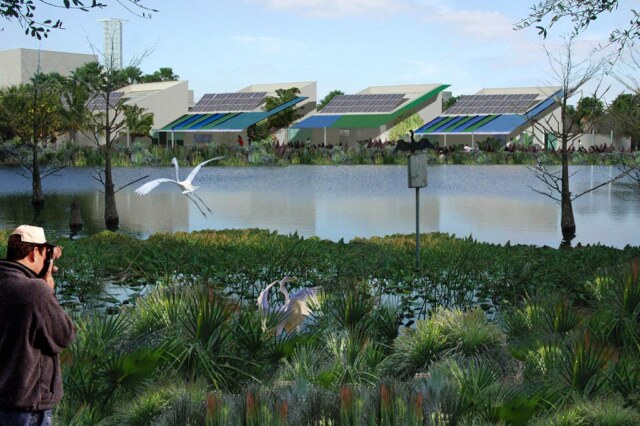
The Waterfront Pavilion is a part of the larger West Palm Beach Waterfront Commons design led by Michael Singer from 2004-2010. The Pavilion is a 6,000 square foot transparent glass-walled community building that opens onto the Commons with panoramic views of the waterfront. It is the first USGBC LEED Certified City of West Palm Beach building (Certified Silver). The building is powered by a grid tied 17kw solar photovoltaic system on its roof. The solar array monitor for this system is displayed in the Pavilion lobby. The building is filled with natural light and the main room may be fully lit and ventilated with no energy consumption. The building and its large terraces are primarily utilized for special events such as the green market, art exhibits, receptions, conferences and weddings.

Huber House

Writer J. Parker Huber commissioned Michael Singer to design a private residence for a one-half acre site overlooking the Connecticut River in a residential area. The key design guidelines for the 1,300 square foot residence included energy efficiency (passive solar design and radiant heat), habitat restoration and privacy. Precast concrete walls and a wooden trellis form the front of the house, screening it from the street. The back opens to views of the mountains and river below. The fifteen-foot-high living room is the center of the house, wrapped by a small bedroom, office and kitchen. Singer lowered the land in the back of the house to reveal the river. The earth from this excavation was transferred to the front yard, creating twelve-foot-high shaped earth mounds. Alongside the mounds, a grove of indigenous trees in the front yard provides a distinctive and private setting for the residence. This project was selected as a Record House and published in Architectural Record in April 1999. In 2008 Parker Huber commissioned Michael Singer for an additional 600 square foot cottage adjacent to the house utilizing similar materials and design principles, with the addition of a solar hot water and radiant heat system.

Millay Colony for the Arts

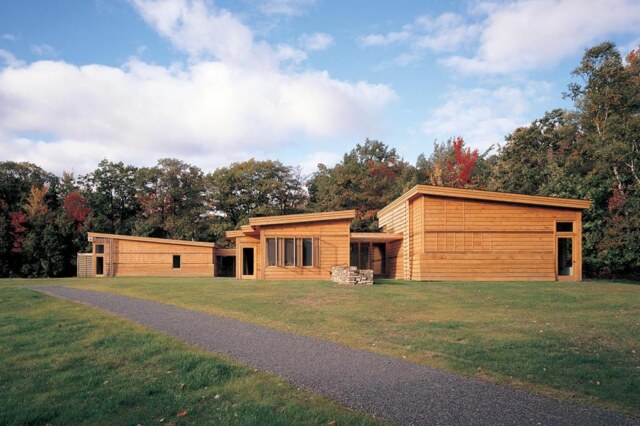
The Millay Colony for the Arts commissioned Michael Singer to design new artists’ residences and studios as well as pathways and landscape for their new facilities. The 3,500 square foot building is set within the 600-acre Steepletop Compound, the former home of poet, Edna St. Vincent Millay, and a Historic National Trust site. The main design criterion for the new facility was universal accessibility for artists with and without disabilities. Throughout the design and construction phases, an Artist Advisory Committee reviewed the design to address issues that artists with and without disabilities confront in residential and working environments. There are three artist studios and residences as well as a living-dining room, kitchen and library for all of the Colony’s residents. Fully accessible, multi-textured pathways allow mobility and visually impaired artists to get around the grounds and into wooded areas where outdoor studio sites are located. The project received support from the New York State Council on the Arts, The Andy Warhol Foundation, The John D. & Catherine T. MacArthur Foundation, as well as many private donors. Among the many publications featuring the project were The New York Times, Architectural Record and Interiors.

EcoTarium

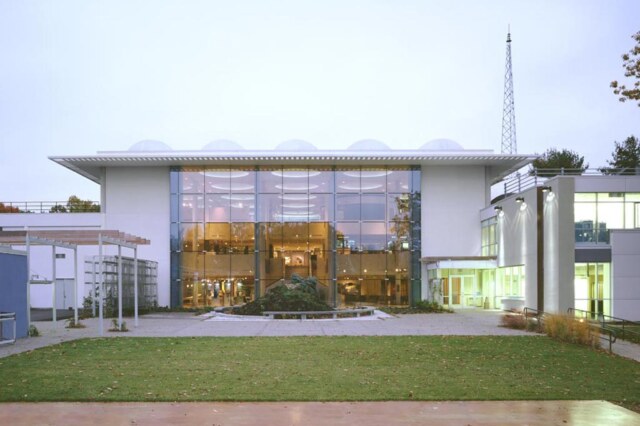
Michael Singer was commissioned to lead a master planning process for the expansion and re-configuration of the New England Science Center now known as the EcoTarium. The mission of the EcoTarium is providing the public with an understanding of the role of ecology and natural systems in our lives. The main building was designed by Edward Durell Stone and built in 1968. The master plan included renovation of the main building and visually opening it up its back with a floor-to-ceiling curtain glass wall that provides views out from the building’s central staircase. The renovation brings light into the core of the main building and connects it to the surrounding campus landscape. Michael Singer also created the emerging garden and water and ice wall directly adjacent to this new transparent wall to reflect the changing seasons and landscape. Singer Studio also designed and constructed the exhibits and the new gift shop within the building.

SDG Office Building

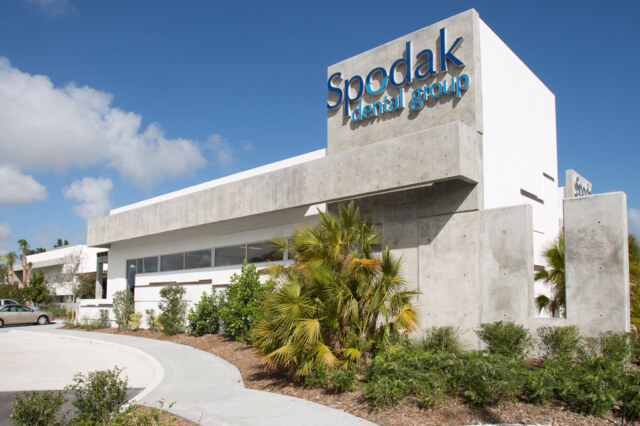
The new home of the Spodak Dental Group is envisioned as an environmentally sound holistic building and landscape that provides comfort to patients, inspires staff and creates an open and transparent facility. The 13,000 square foot LEED Gold building provides space for 18 dental operatories, laboratory space, offices, gathering spaces, a learning center, a waiting area and support spaces. The building design is centered around one main goal: creating abundant natural lighting and indoor spaces that feel a part of the surrounding gardens through large expanses of transparent walls.

Contemplative Pond Pavilion

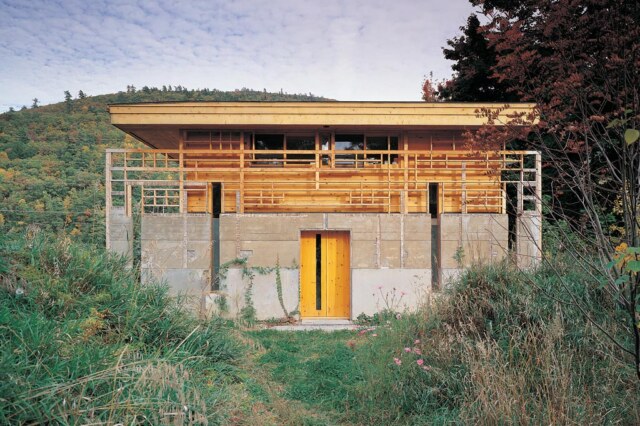
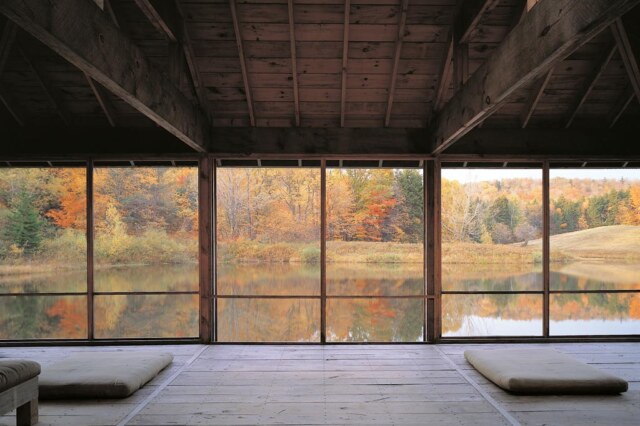
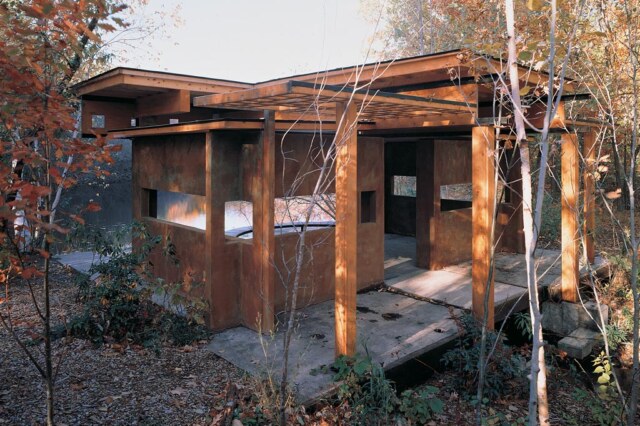
During a ten-year period, Michael Singer worked on the design of a twenty acre site in Southern Vermont, constructing a pond, changing topography and re-naturalizing plantings. The long-term project culminated with the design and construction of a pavilion overlooking the pond. The twenty-acre site is accessible on pathways through farm fields. Large quantities of earth removed for construction of the pond were used to build a small hill at the northern end of the pond, while the pavilion is built at the southern end of the site. A low-ceiling entryway opens into a 14’ x 20’ room extending over the pond edge. Built of thick wooden planks, glass and screening, the pavilion also contains furniture designed by Singer.

Garden Shelter

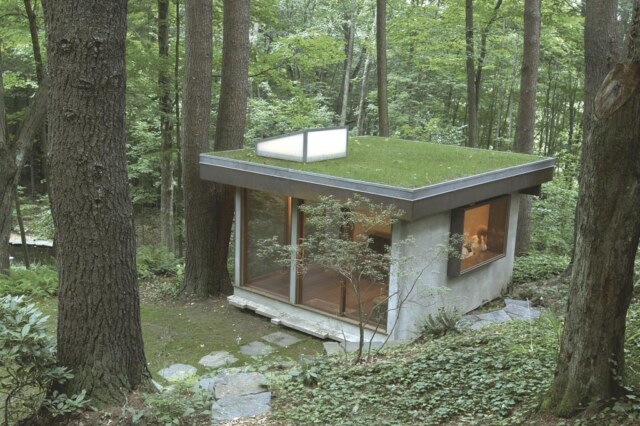
The Garden Shelter was designed and built by Michael Singer Studio as a part of the larger terraced sculptural landscape project for a private client. The structure is a spare 14’ x 16’ contemplative shelter with a planted roof, sculpted copper and cast concrete details, and stone walkways. The pavilion has built-in wood furniture and sliding window and screen panels.

EcoTarium Pond Pavilion

Michael Singer was commissioned to lead a master planning process for the expansion and re-configuration of the New England Science Center now known as the EcoTarium. The mission of the EcoTarium is providing the public with an understanding of the role of ecology and natural systems in our lives. For the Center’s lower pond, Singer invited architect Daniel Johnson to join him in the design of a pavilion which also functions as a small bridge across the pond outlet stream. The pavilion provides a scenic stopping point along the woodland trail, and its site is interpreted by the EcoTarium as a place for visitors to contemplate the many types of human constructions that provide close contact with natural environments. The open structure of the pavilion frames views onto the pond and into the woodlands. A semi-circular teak and steel bench is large enough for a school group to gather for special programs. Vines have been planted to climb the columns and trellis, and birds roost in the eaves.

Contemplative Shelter

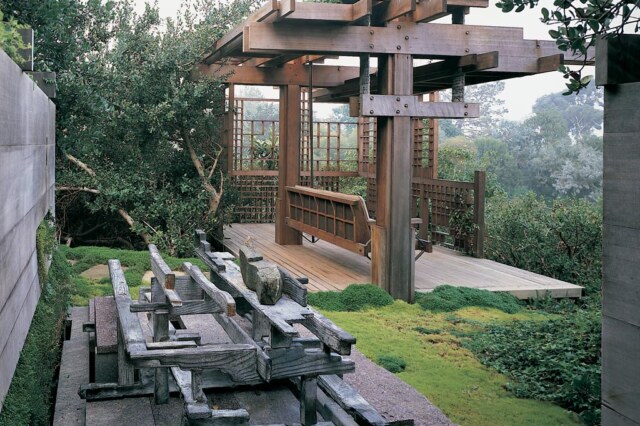
For a private residential site in La Jolla, California, Michael Singer was commissioned to design and construct a sculpture, pavilion, pathway and plantings. A pathway leads to the top of the hill where the shelter provides a place for viewing a stone and bronze sculpture and the ocean. The shelter walls are redwood trellises planted with vines. Transparent glass panels and planters form the roof. A swing bench hangs from brass straps attached to the beams. The site for the granite and bronze sculpture Ritual Series/ Map of Memory 1990 is cut into the hillside and retained by a redwood wall containing planter pockets. Mesquite trees grow along the pathway and around the pavilion.

Phoenix Sculpted Shade Structures

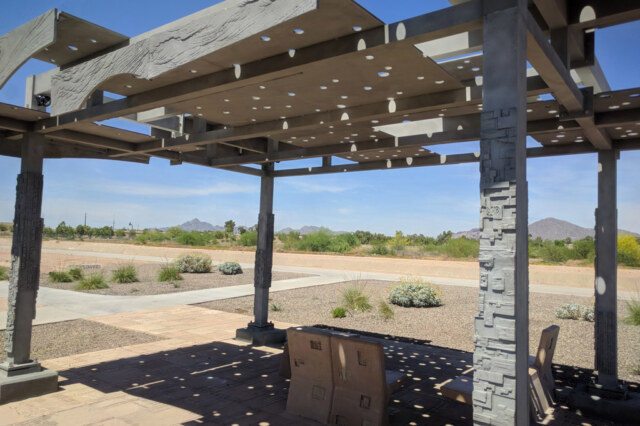
Singer Studio's sculpted shade structures were created as a part of the…

Whole Foods Market Orlando

Whole Foods Market (WFM) engaged Michael Singer Studio to address what were described as dull, disorienting, formulaic shopping center developments in their Florida Region. The challenge put forth was to demonstrate how a shopping center could be distinctive, environmentally healthy and socially dynamic instead of being the catalyst for local resistance. WFM Orlando was a case study project for leveraging the Market’s position as the anchor retailer and engaging the developer to create an enhanced building shell, public space and a naturalized landscape. The Singer Studio Design Team worked with Kelly Mills at WFM to integrate the Singer Studio conceptual and schematic designs with final designs developed by the architect and landscape architect of record. The built concepts include extensive awnings, clerestory lighting, skylights, low-e glazing, living walls with in-wall planters, a courtyard dining space and naturalized parking lot, buffers and bioswales. WFM Orlando was a successful demonstration project for gradually moving developers towards more sustainable and well-considered shopping centers.

Seminole Parking Structure

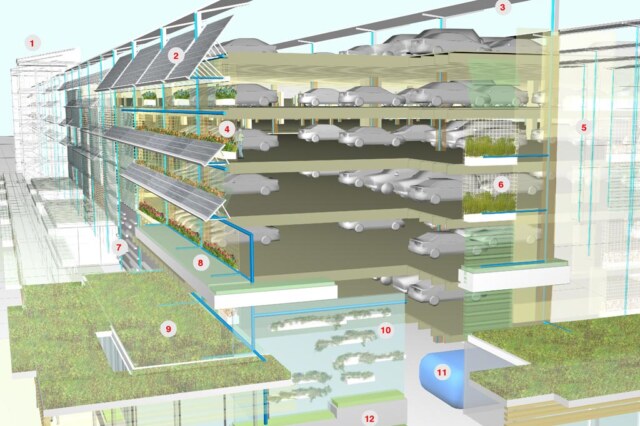
The Seminole Coconut Creek Casino and Resort engaged Michael Singer Studio to review the master plan and design for the expansion of their facilities in Coconut Creek and to recommend and identify public areas in the development that could achieve a “conspicuous display of green technology” and integrate public art. The Studio addressed the next phase of the project- a 7 storey, 3000 car, valet and bus parking structure, to see how it could support a range of environmental functions in a highly visible manner. The Studio identified a range of possibilities, re-imagining the entire skin of the structure, its internal systems and its top deck. The top deck of the garage was designed with solar pv canopies that also provide shade for vehicles, support LED light strips along the canopy underside to reduce light pollution, and collect clean rainwater for sculptural water elements and gardens integrated with the building’s skin and the surrounding retention ponds. The skin of the structure was designed as an armature for small horticultural gardens that produce non-edible native plants for local restoration projects as well as flower displays at the resort. The water for these gardens was designed to be collected from the roof canopies and stored in cisterns and the retention ponds on site. The soil for the gardens could be supplied by compostable waste from the resort, creating a closed loop for organic waste within the site. The structure’s skin is also envisioned as a large scale canvas derived from traditional Seminole Tribe patterns comprised of perforated metal panels and wire mesh. The ground floor retail buildings support green roofs and are surrounded by living walls and outdoor cafes. Aspects of this study were integrated and built within the final garage design- including the solar canopies, the Sculptural Biofiltration Wall, rainwater harvesting and green walls.

Emergency Operations Center

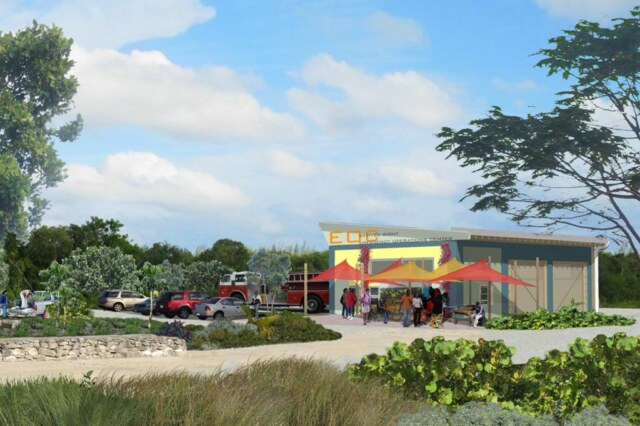
The greater community of South Eleuthera has recognized the need for an Emergency Operations Center (EOC) serving the region south of Rock Sound to provide critical emergency fire and medical services. The new facility will function not only as an EOC, but also as a community center and regional model for sustainable design and construction. In addition to the EOC, the site plan includes a shaded outdoor gathering space for vendors and events, a compost drop-off area, and a community garden all defined by plant beds of native and drought tolerant vegetation with stone walls. The building is intended to have bright colored walls, shade sails, and signage to announce the community structure from the road and encourage visitors to stop by when vendors are present. The building structure is designed with simple, cost-effective, and locally well known building practices, while utilizing new green materials and technologies in creative ways. Sustainable energy, ecology and water systems for the building and site have been developed for both functional day-to-day operations and emergency situations. The EOC building design follows the guidelines and recommendations for Island-wide environmental renewal as stated in the 2010 planning report “A Shared Vision For South Eleuthera“ created by Michael Singer Studio. The funding for the design was provided by the Jeffrey Cook Charitable Trust which carries the mission to “explore opportunities and responsibilities of the built environment and its interaction with the natural environment, in securing human sustainability and enhancement.” Nearly one half of the grant funds were utilized to purchase and transport a rainwater cistern tank from a nearby defunct resort for re-use at the EOC. The rainwater tank will supply water for emergency use, irrigation use during droughts and for the future community gardens. The project is in construction.

Vermont Natural History Museum

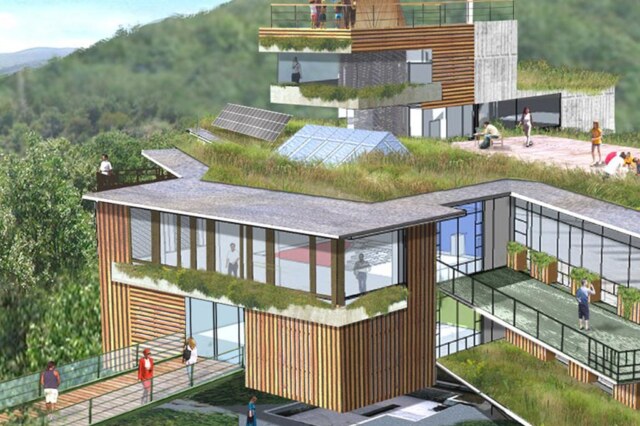
The Michael Singer Studio design team was selected to develop the conceptual design for the Southern Vermont Natural History Museum on a site known as Skyline located on Route 9 midway between Bennington and Brattleboro. This stunning location, setting, and its expansive 100-mile view, is the main attraction for thousands of tourists using this scenic route. The integration of the building design within its setting creates an experience that provides different ways of seeing the Vermont landscape. The three vertical levels of the building correspond spatially to the overview and sky, being in the trees, and walking on the ground. The interpretive programs explore these themes, “Gateway to Special Places“, on each level; nature’s impact, human imprints, and the dynamic interactions between humans and nature. Best practices in sustainable design were a guiding principle of the project. The building was a demonstration of energy efficiency, active and passive solar energy collection, on site storm water treatment, careful selection of building materials, naturalized landscaping and habitat creation.

FAU Transformations

During the 2005-2006 academic year the Dean of the School for the Arts and Humanities of Florida Atlantic University (FAU) asked Michael Singer to provide a concept vision for an addition to the Visual Arts building, an interior space plan, and an integration of the building with the landscape and public space proposal of the Transformations Project. Singer engaged the College of Engineering in a research of structural and civil engineering issues along with a cost analysis that helped guide a collaboration with the Singer Studio Design Team. The new 10,0000 square foot building incorporates student gallery space, a new office for the Visual Arts Department, seminar and studio classrooms, and outdoor roof gardens. Proposed additions to the current Visual Arts Building help define the use of the large deck overlooking the Transformations project. FAU has approved the concept vision and is actively fundraising for both the Transformations Project and the new Visual Arts building additions.
Architectural Design Michael Singer Studio