logo
logo

Sculptural Gardens

These garden projects are site specific sculptures merged with the landscape to regenerate the land, cleanse water and inspire curiosity about natural systems. Larger projects are documented in the Landscapes section of the portfolio; courtyards and indoor gardens are highlighted in the Interior Gardens and Courtyards section.

Stuttgart Memorial Garden

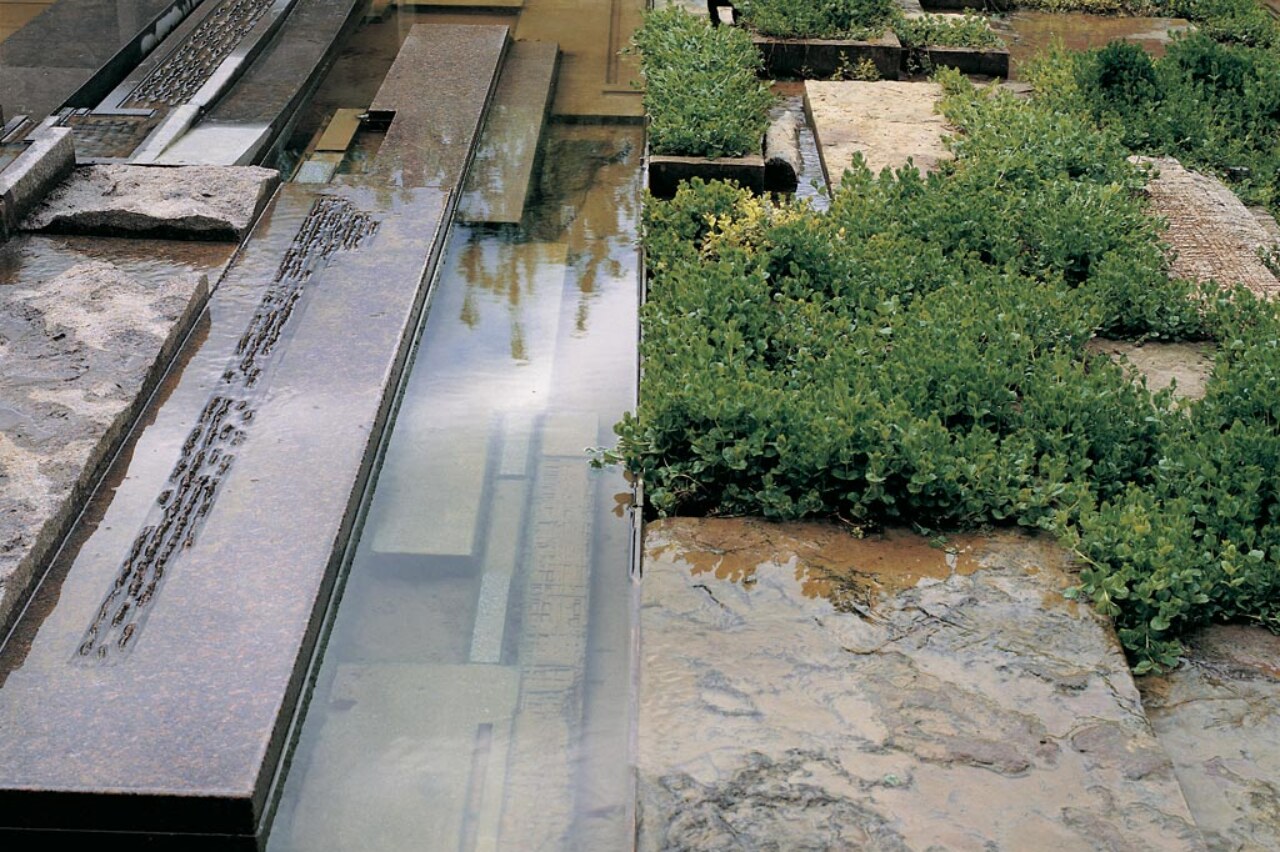
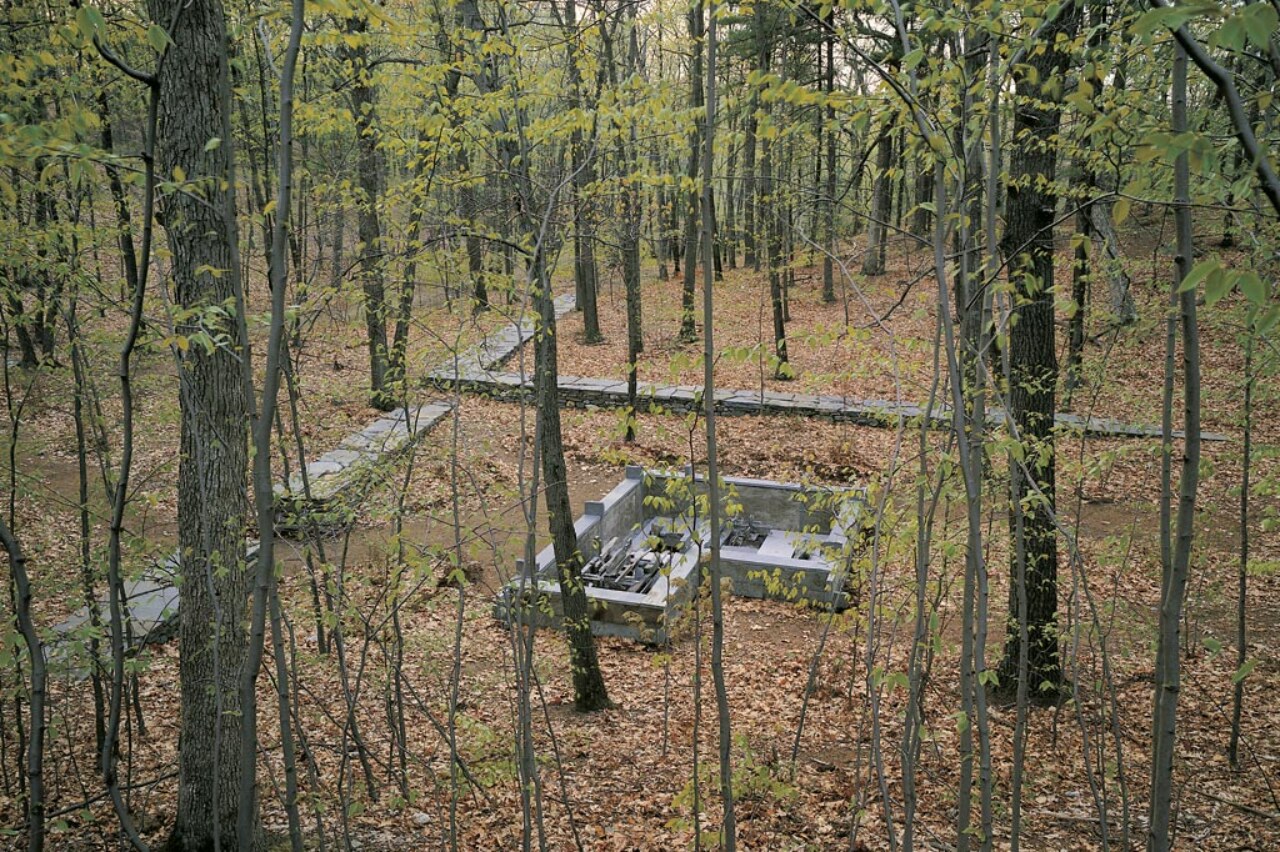
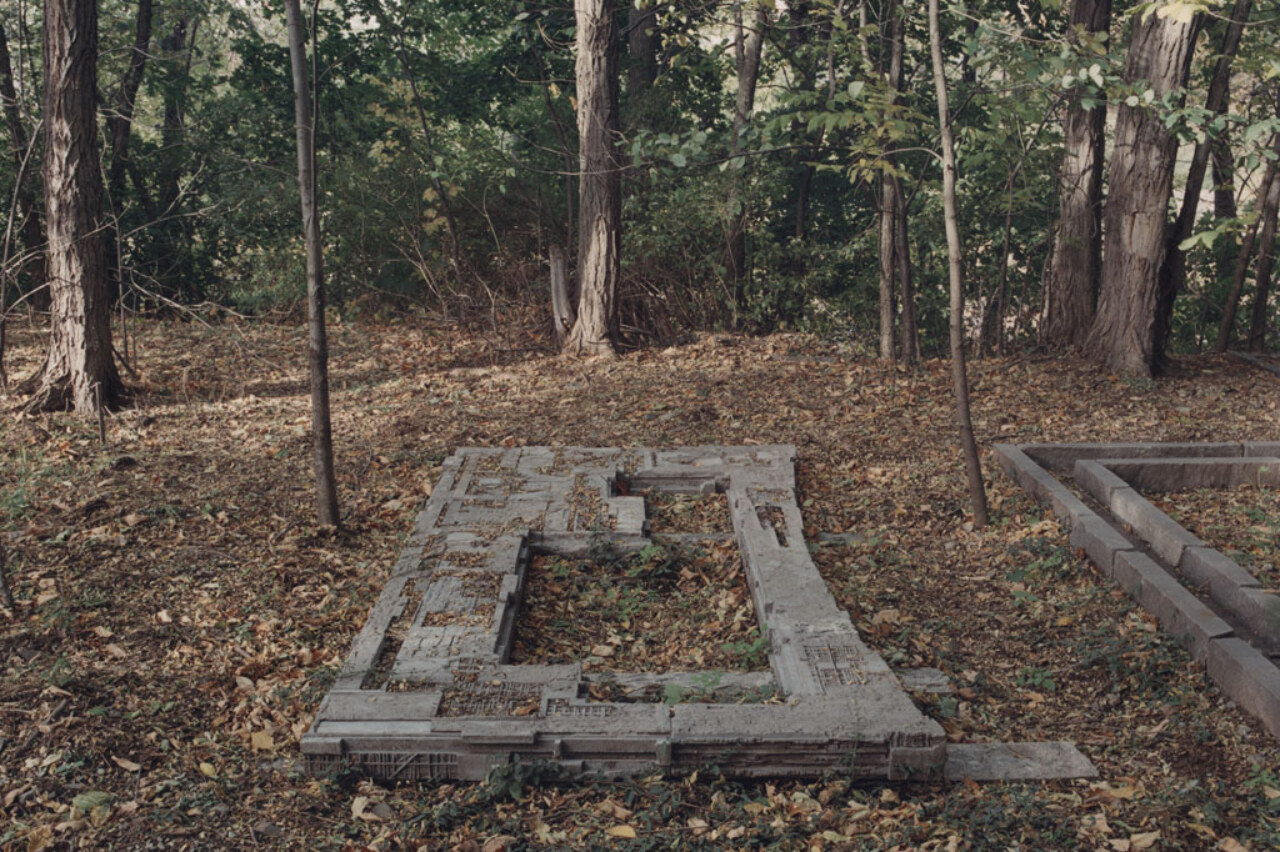
The City of Stuttgart commissioned Michael Singer to design and construct a one acre garden within Killesberg Park. The garden was conceived as a series of enclosed and layered spaces for remembrance. The project is defined by two primary spaces, one a shaded area and one opening to the light. The spaces are enclosed by vegetation and sculpted wood gates. Two existing small streams converge at the site, augmented by three wells designed by Singer. The water collects in quiet pools, revealing sculptural forms and chambers below the surface. In effect, the sculptural pools and wells slowly cleanse and aerate the water as it moves through the garden. Pockets of native vegetation are built within the pools and emerge as though from a layer of earth beneath the water. While most of the water in the garden seems still, the passage of the water can be heard moving in concealed troughs throughout the garden. Materials for the sculptural garden include stone, sculpted precast concrete, bronze, wood, indigenous plantings, concrete foundations and soil. The site is surrounded by an old apple orchard that was restored as part of the garden design. Adjacent to the project site is a now fully vegetated hill that was created after World War II from the rubble of nearby buildings. A poem found in 1945 among messages on a ghetto wall in Warsaw and originally written by Nachman of Breslow, circa 1800, is inscribed on a granite tablet within the Memorial Garden: "The world in its entirety is a narrow bridge, the main thing is not to be afraid."

Uplifted Ground at the Austin Airport

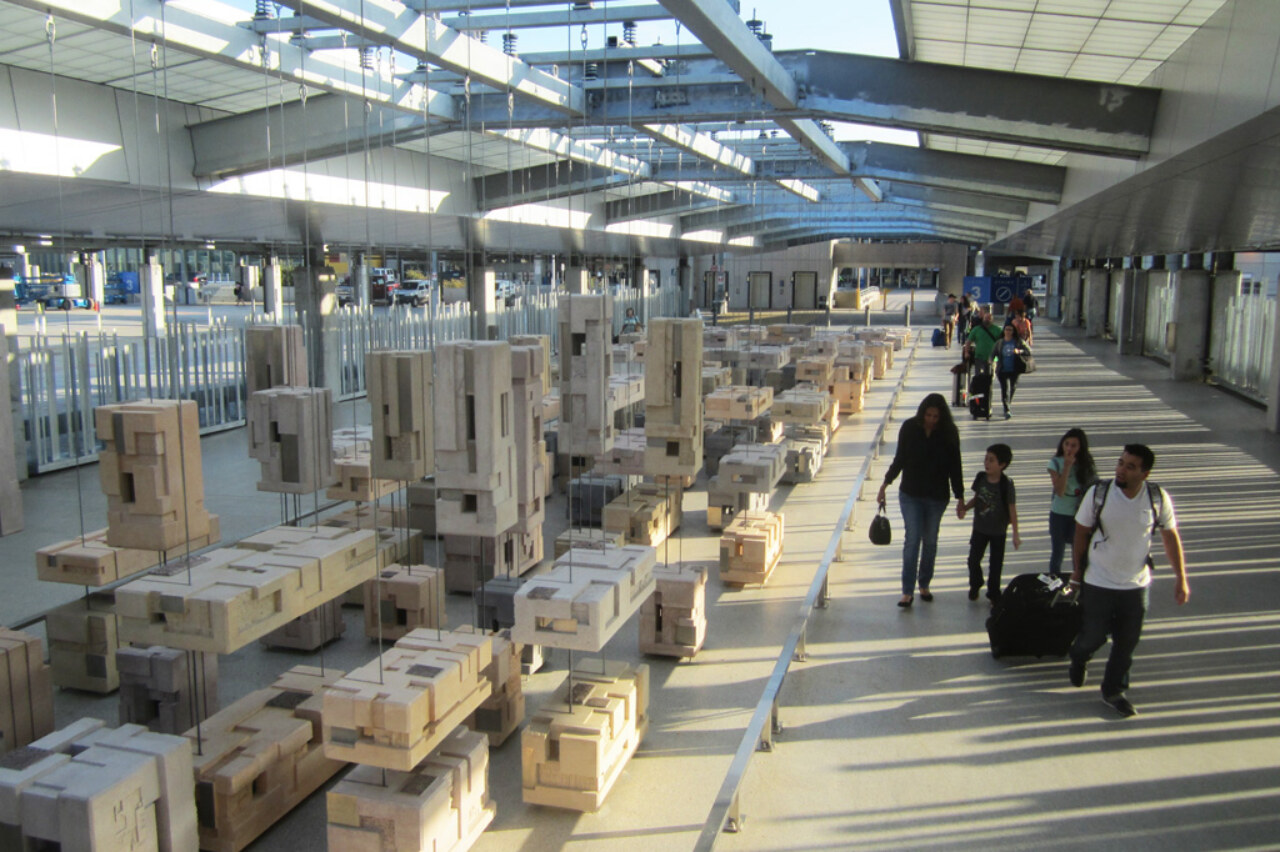
Uplifted Ground, a new 300 foot long sculptural landscape by Singer Studio at the Austin Airport.

Athens Embassy Entry Garden

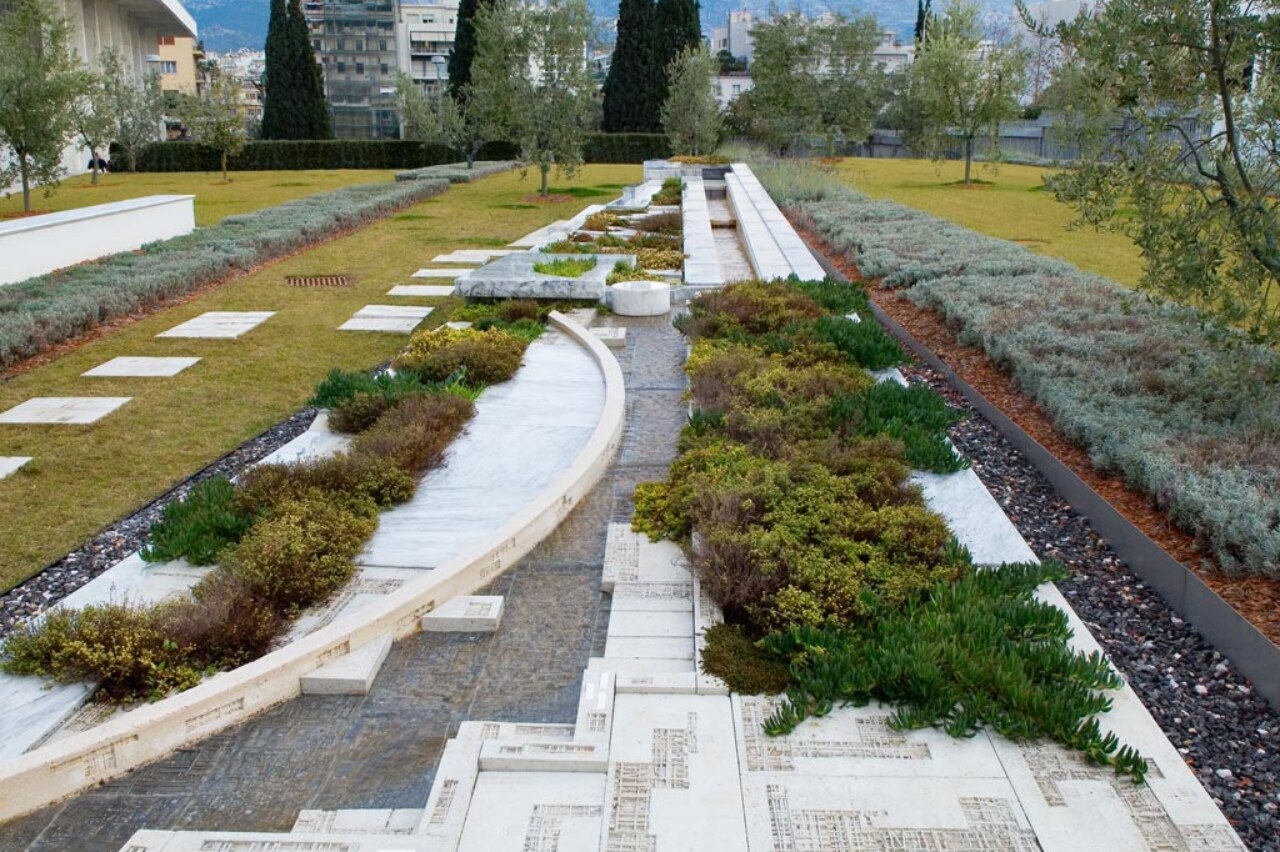
The Foundation for Art and Preservation in Embassies (FAPE) is a private non-profit organization dedicated to placing American art in US embassies throughout the world. FAPE selected Michael Singer to provide an entry garden sculpture for the American Embassy in Athens, Greece. A new building addition design by Kalman, McKinnell and Wood Architects was constructed adjacent to the existing Embassy Building designed by Walter Gropius. The entry garden, located between the buildings, is viewed from the new building, its terrace and from above on the entry bridge. The sculpture is a seventy foot long marble and precast concrete platform-like structure emerging from below grade at one end and rising three feet from the ground level at the other end. The solid forms of the piece combine to reference a whole, as if the piece were a foundation for something once present. The piece has been said to have archeological references, an uncovering of something lost and mysterious.

Becton Dickinson Courtyard Garden

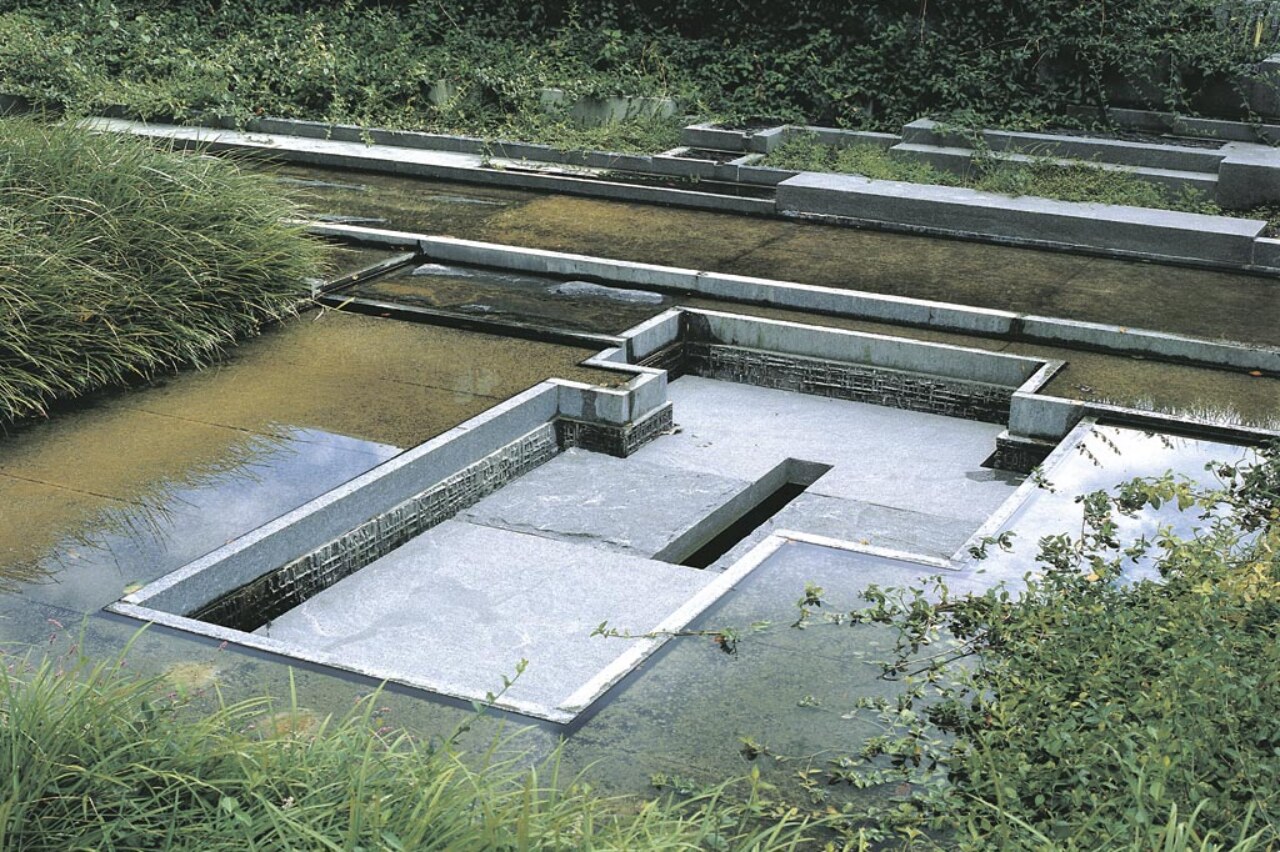
When the Becton Dickinson Corporation expanded its Franklin Lakes campus to include a new Center for Research and Development, Singer was asked to design the exterior courtyard associated with the new building expansion. Singer had previously completed two interior atrium spaces within the original headquarters building. The new exterior garden was conceived as an extension of the previous work, incorporating related forms, materials and detailing of the Atrium Garden. Upon entering the Center there is a view of the Courtyard Garden framed by the east and west wings of the building. From the building the land slopes downhill towards the woodlands beyond the garden. The garden merges a series of low stone retaining walls and stepping terraces with the gradual slope of the ground towards the adjacent woodlands. There are sculptural elements both below and above the ground level of the terraces, as well as water pools supplied by a channel adjacent to the garden pathway. The water in this channel collects in the lowest pool where it gently falls into a cistern, eventually returning to the upper-most terrace water source. The final cistern is formed as a well with a sculpted granite cap; the composition of the well and cap are designed to echo and enhance the sound of the water, giving it a strong presence within the garden. Due to the multiple terraces of the sculpted ground it is difficult for a person standing within the garden to see all aspects of space. Only when the large courtyard is viewed from offices on the upper building floors surrounding it are the overall garden and sculptural details understood as a whole.

Piney Branch Water Garden

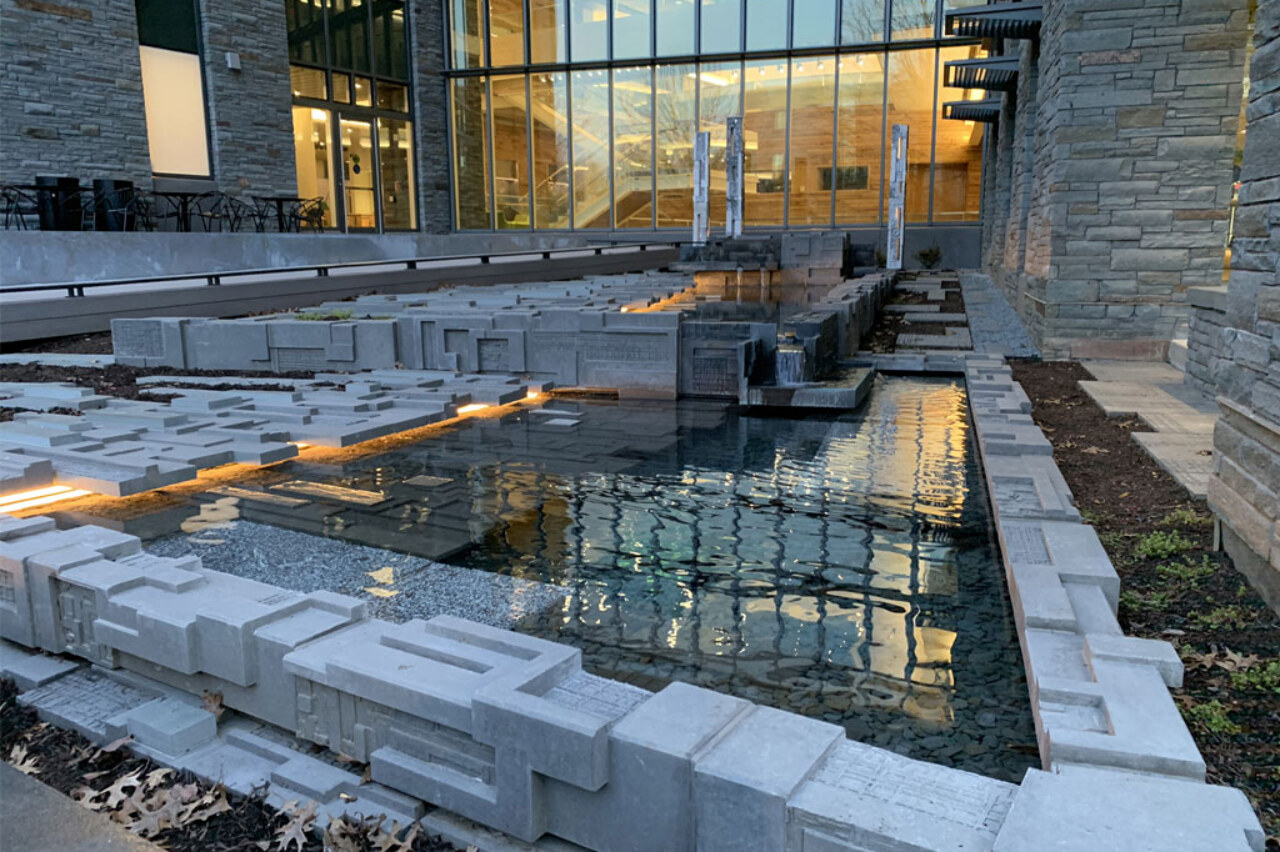
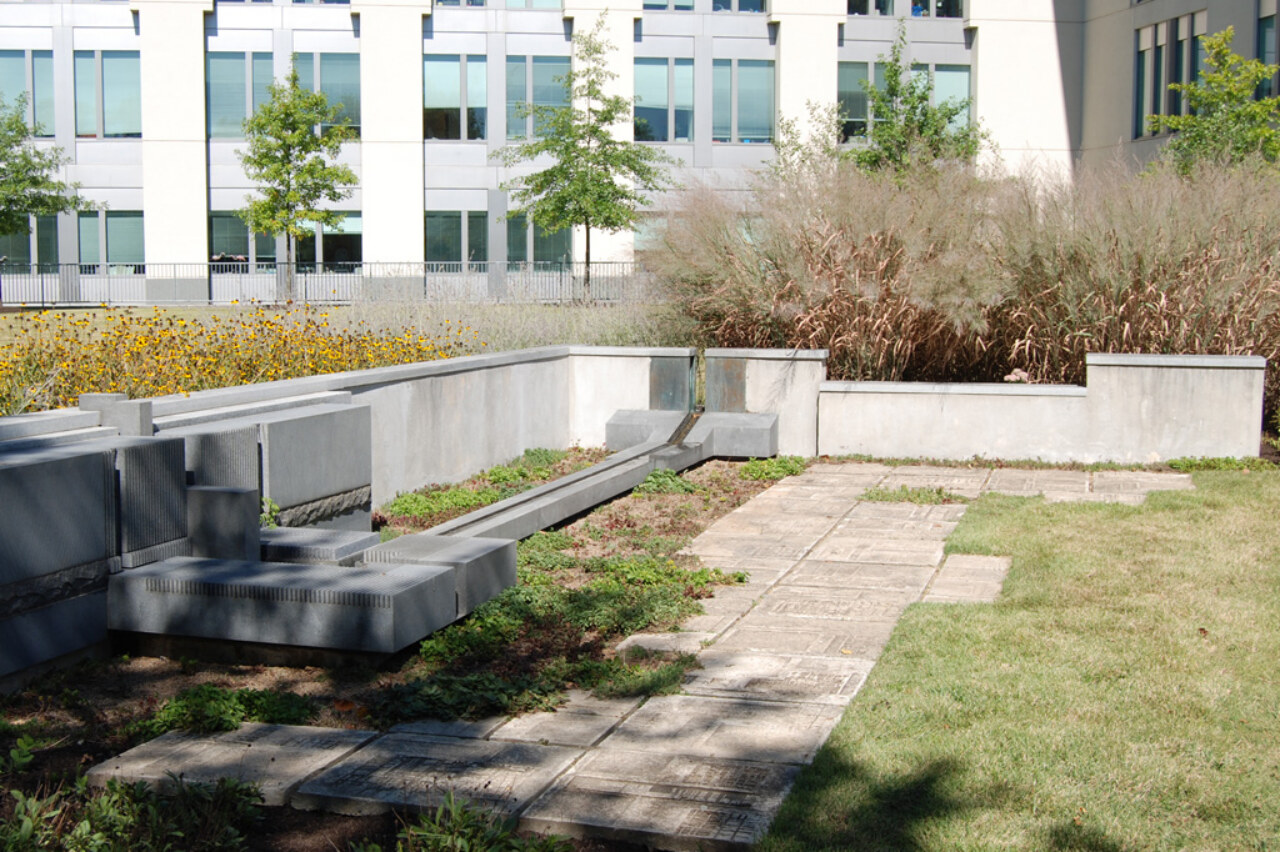
The Piney Branch Water Garden is an original work of art by Michael Singer Studio located at the Biomedical Sciences and Engineering Building at the Universities at Shady Grove in Maryland.

Groundswell at Downsview Park

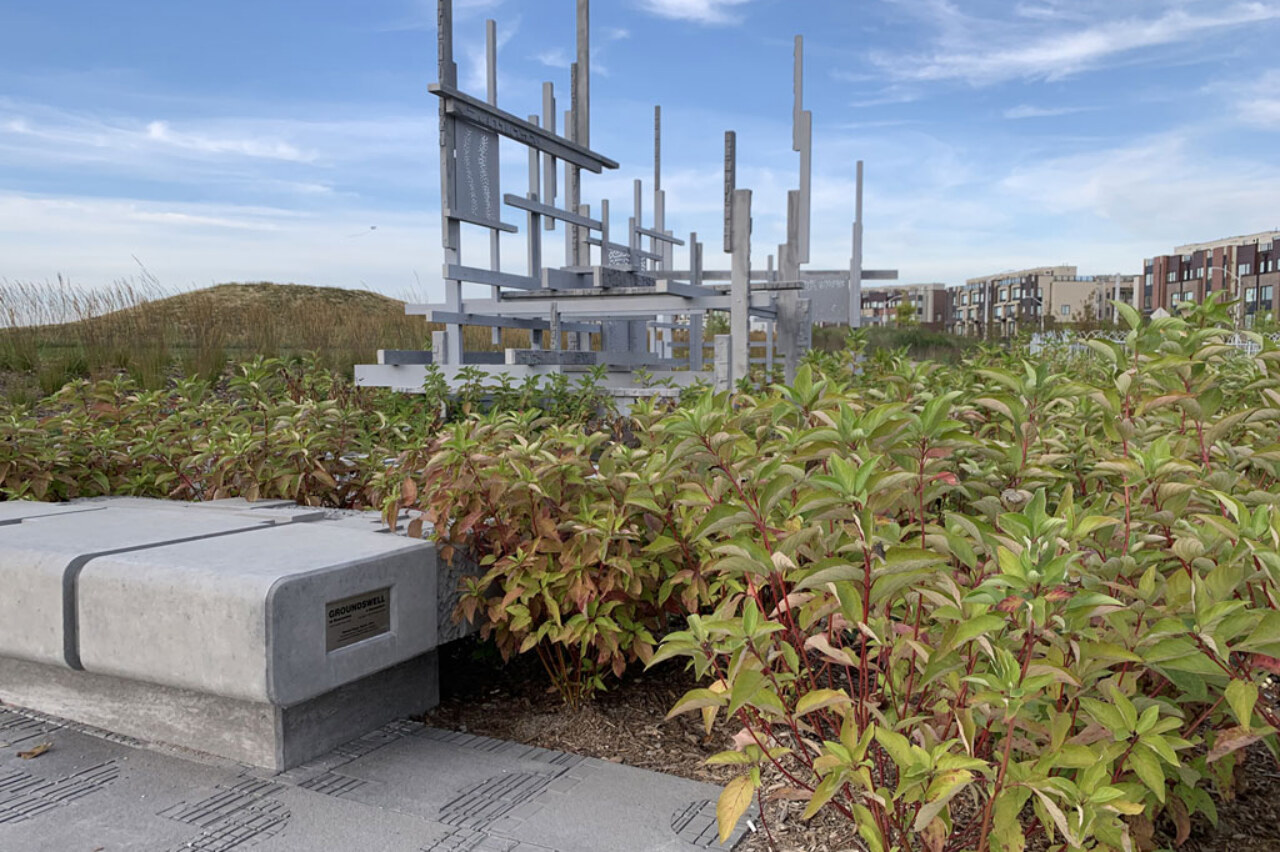
Groundswell at Downsview Park is an integrated work of art by Michael Singer Studio

Conway Sculptural Garden

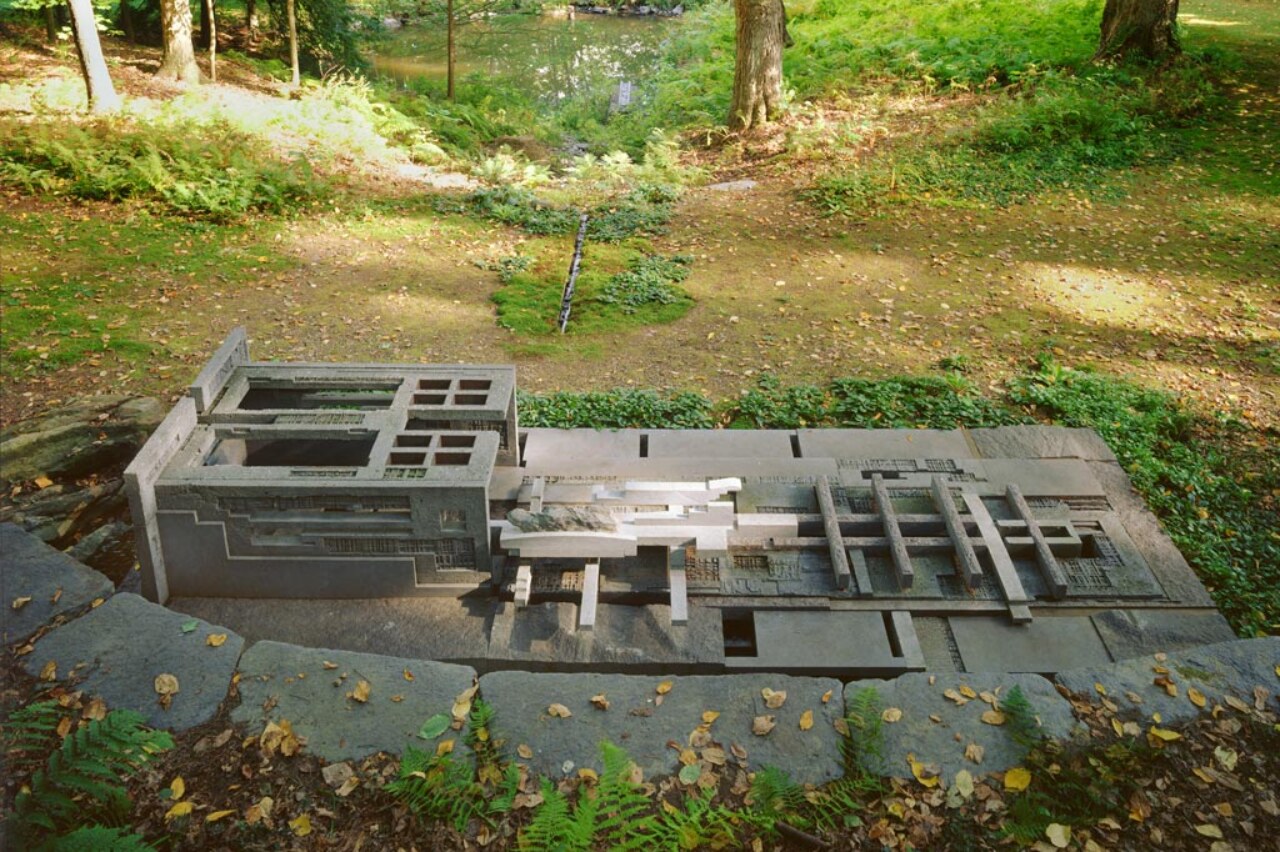
Former Smith College President Jill Ker Conway commissioned Michael Singer to create…

Caloosahatchee Water Wall

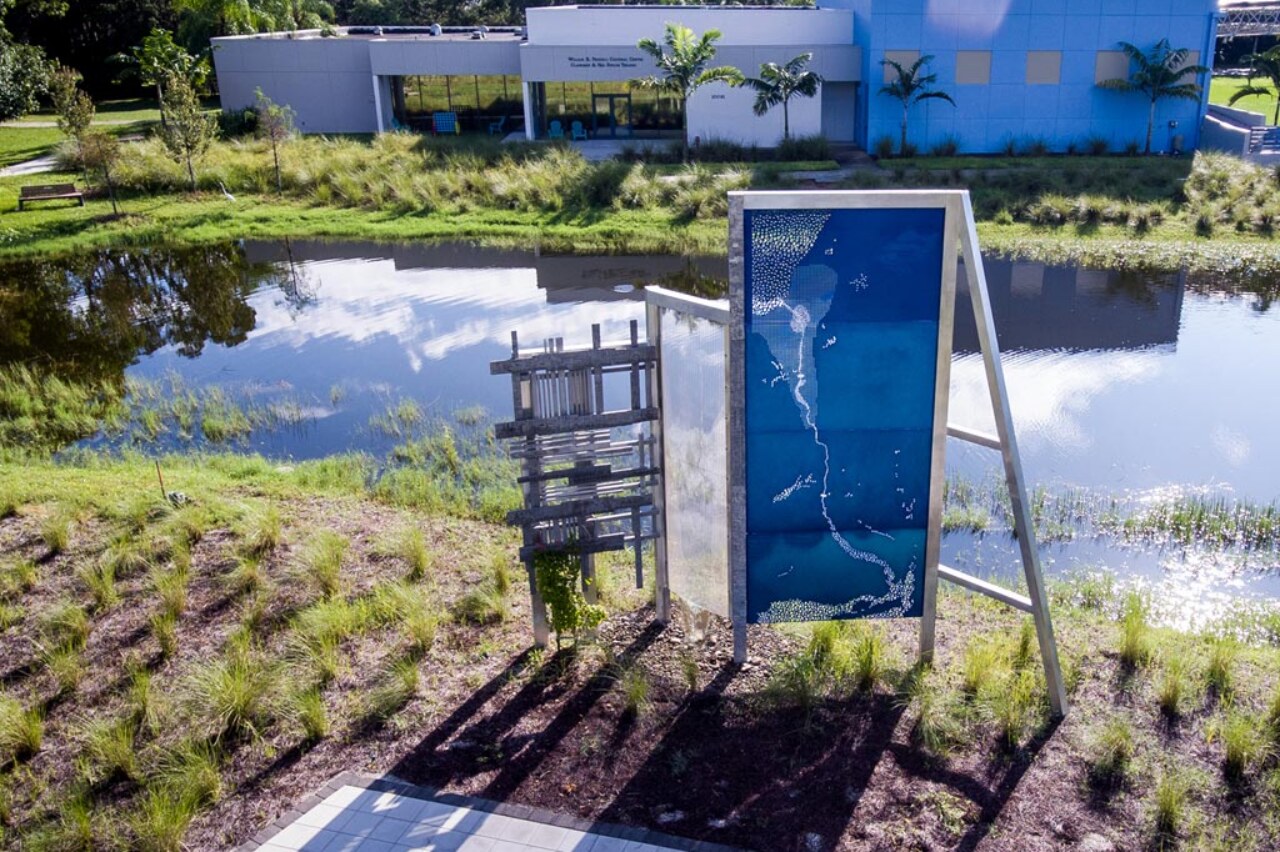
The Caloosahatchee Water Wall and the surrounding naturalized landscape were created together…

West Palm Beach Water Gardens

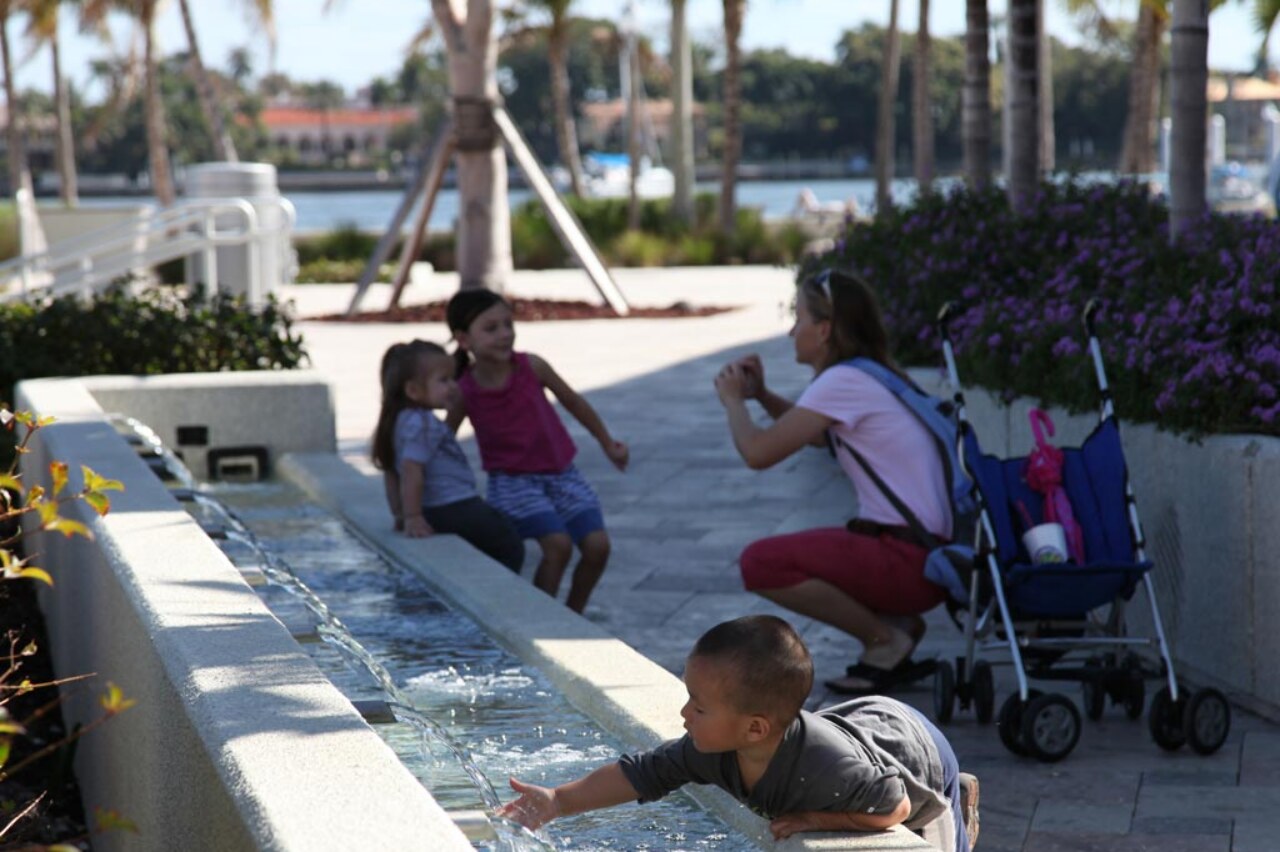
Michael Singer Studio was selected as a part of an integrated design team to lead the re-imagining and design of the new West Palm Beach Downtown Waterfront. Seven individual sculptural water gardens can be found throughout the Waterfront, each with a different character, sound and play on water. Shaded garden pathways along both North and South Clematis Streets have several unique sculptural water gardens. Along North Clematis are three distinct water garden spaces. In the middle of the site a crescent water element wraps the center platform and event space just east of the end of Clematis Street. This multi-level water element cascades from the north and south meeting at a low point to the east, towards the waterfront. This water element and several others have become notable local play spaces for children. Along South Clematis there is an aquatic garden with water lilies and native aquatic plants and another cascading water element along a ramp leading to the upper terrace of the Waterfront Pavilion. Along the waterfront there is a singular curved water element along the back side of a long bench that rains down water within a confined channel.

Garden of the Seasons

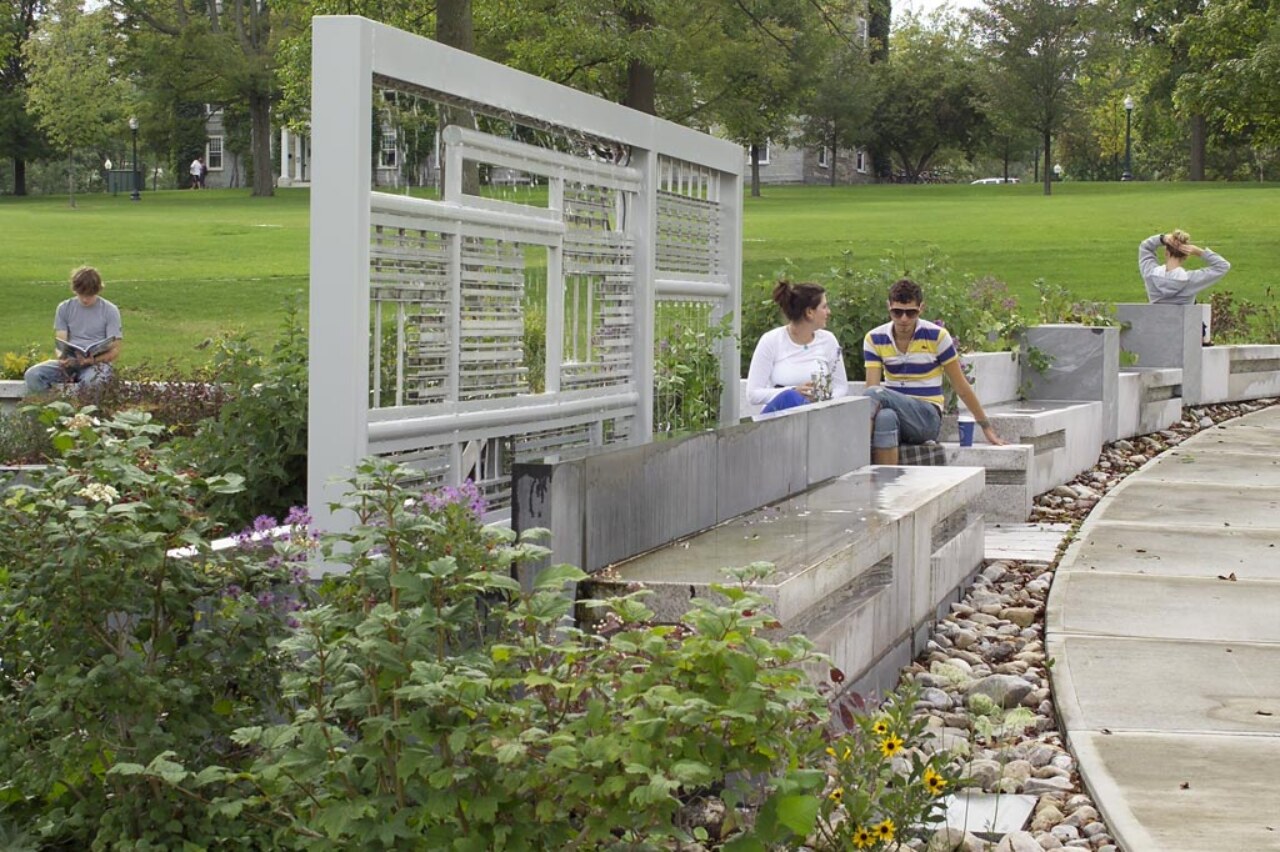
Middlebury, Vermont Garden of the Seasons is located on a main pathway…

Woodland Garden

Wellesley College, Massachusetts The two acre site on the extensive, beautifully landscaped Wellesley…

Contemplative Garden and Shelter

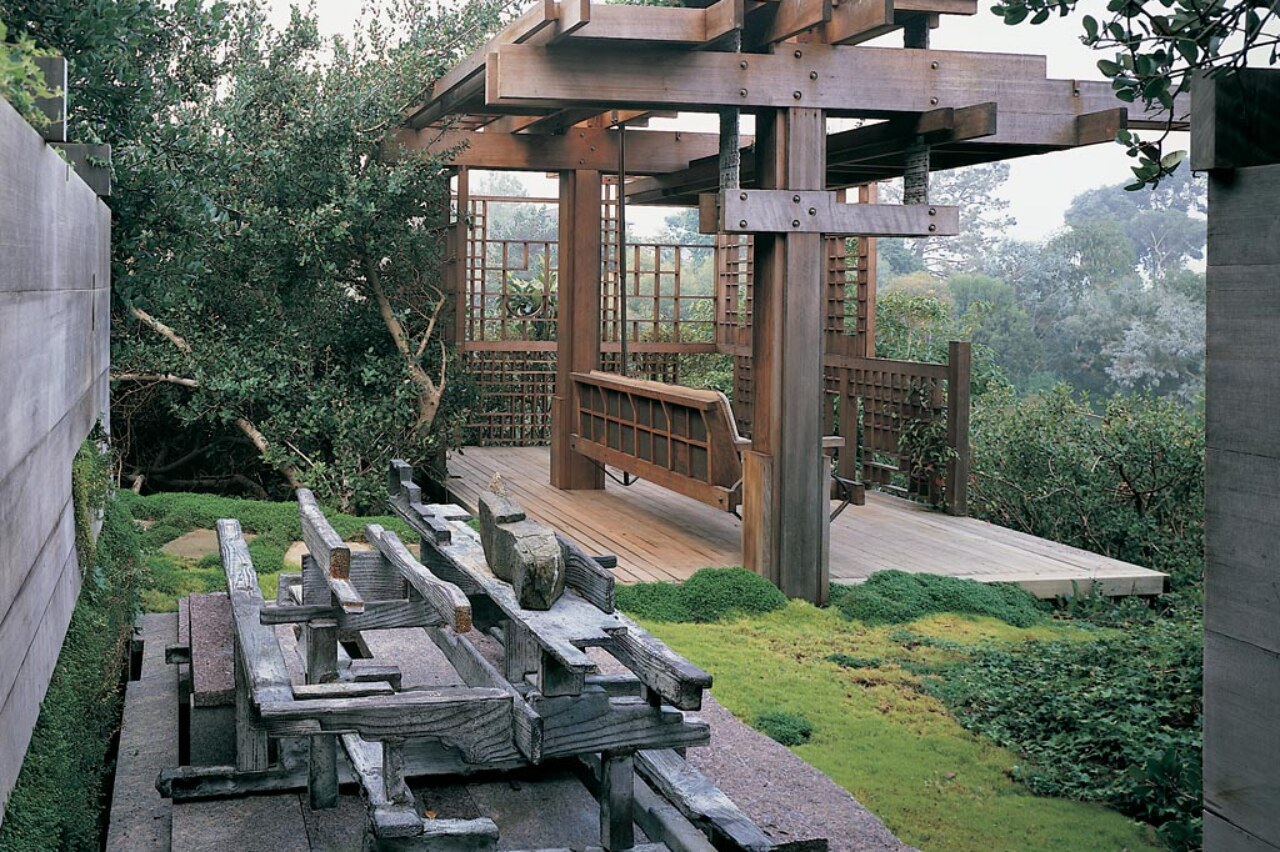
La Jolla, California For a private residential site in La Jolla, California,…

FDA Healing Garden

Michael Singer was commissioned create the FDA Healing Garden for the Food…

Seminole Sculptural Biofiltration Wall

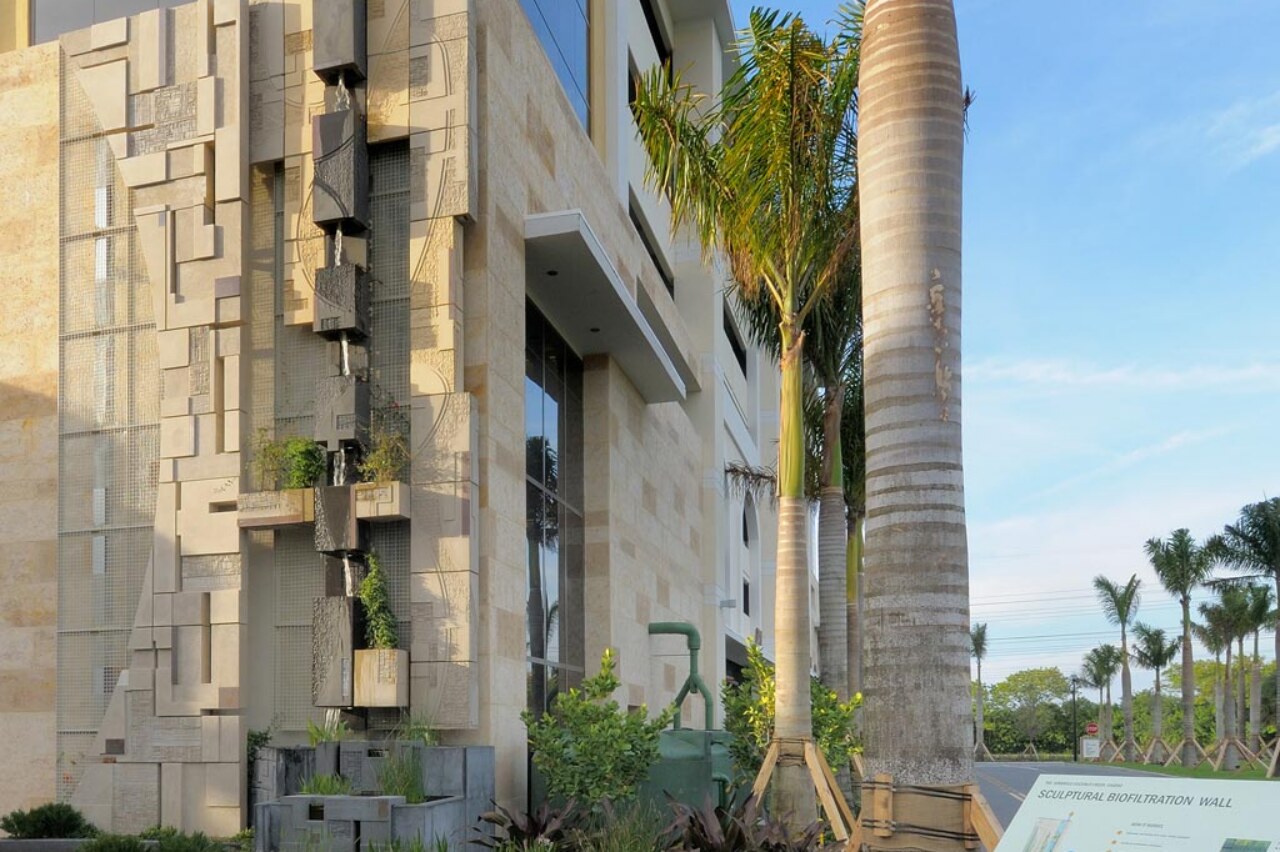
The Sculptural Biofiltration Wall was created as an integral part of the expansion of the Seminole Coconut Creek Casino. The project is comprised of a 40 foot tall sculptural wall and a multi-level aquatic garden located in a courtyard adjacent to a new 7 storey parking structure. The Sculptural Biofiltration Wall was conceived as a living system designed to regenerate the surrounding environment by improving water quality, enhancing habitat viability, as well as informing and inspiring the public about ecological systems. The project filters approximately 150,000 gallons of water a day through mechanical and biological systems, improving the water quality of the adjacent retention ponds. The retention pond water is used for irrigating all of the vegetation on site including the parking structure green walls, and may be used for future plaza water elements, reducing the use of potable water. Harvested rainwater supplements the water system with 10,000 gallons of water storage capacity. The rainwater is filtered and stored within four tanks along the east wall of the parking structure and is planned for use in a future valet car wash. The Sculptural Biofiltration Wall fosters biological systems including plants, fish, and beneficial bacteria that naturally cleanse water. Improving water quality in the retention ponds also assists to improve habitat viability and biodiversity of the ponds. The sculptural wall itself supports a range of vegetation to attract avian wildlife, especially hummingbirds and of course, butterflies - Coconut Creek being “The Butterfly Capital of the World”. The 23kW solar photovoltaic canopy arrays on the parking roof deck provide enough power to supply 3 to 4 average Florida homes. This renewable energy source provides many times the energy needed to power the pumps, filters and lighting for the Sculptural Biofiltration Wall; the remaining electricity helps to power lighting and elevators within the parking structure. The solar canopies are also the source of the harvested rainwater. All of the project lighting is energy efficient LED lighting.

Pawtucket Falls Garden Sculpture

Lowell National Historic Park, Lowell, Massachusetts The Lowell Historic Preservation Committee invited…

Denver Airport Atrium Garden

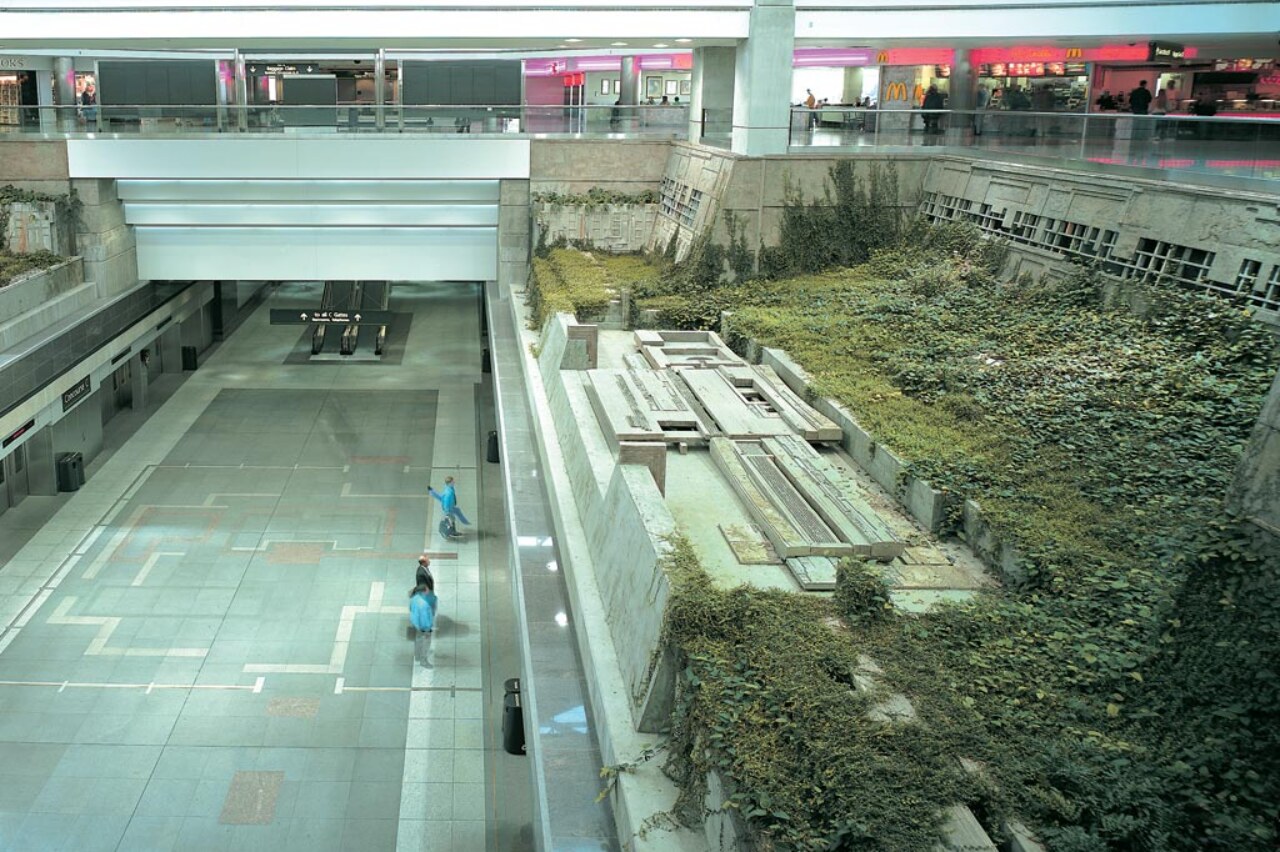
Concourse C of the Denver International Airport was re-imagined as a garden oasis within the steel and concrete cathedral-like core of the building. The garden encompasses the entire circulation space where passengers enter and exit the airport train connecting the concourse to the main airport terminal. On the lower level, adjacent to the trains, is a sculpted 7,000 square foot plaza of patterned inlaid granite and copper. Exiting the train one immediately steps upon this patterned plaza and can see hints of the garden above where the sculpted walls emerge from the platforms above the trains. As one travels up the stairs or escalator to the main concourse level the garden slowly emerges as two surrounding stepped gardens bounded by sculpted walls. The two facing gardens, each built over the train system below, frame the entire circulation core, creating the experience of ascending into the garden from below or descending into the garden from above (when returning to the main terminal). The design of the garden takes advantage of this unique experiential space with a layering of multiple sculptural levels and details that are sequentially revealed by moving through the building and ultimately understood as a whole by viewing the entire interior garden from above.

Becton Dickinson Atria Garden

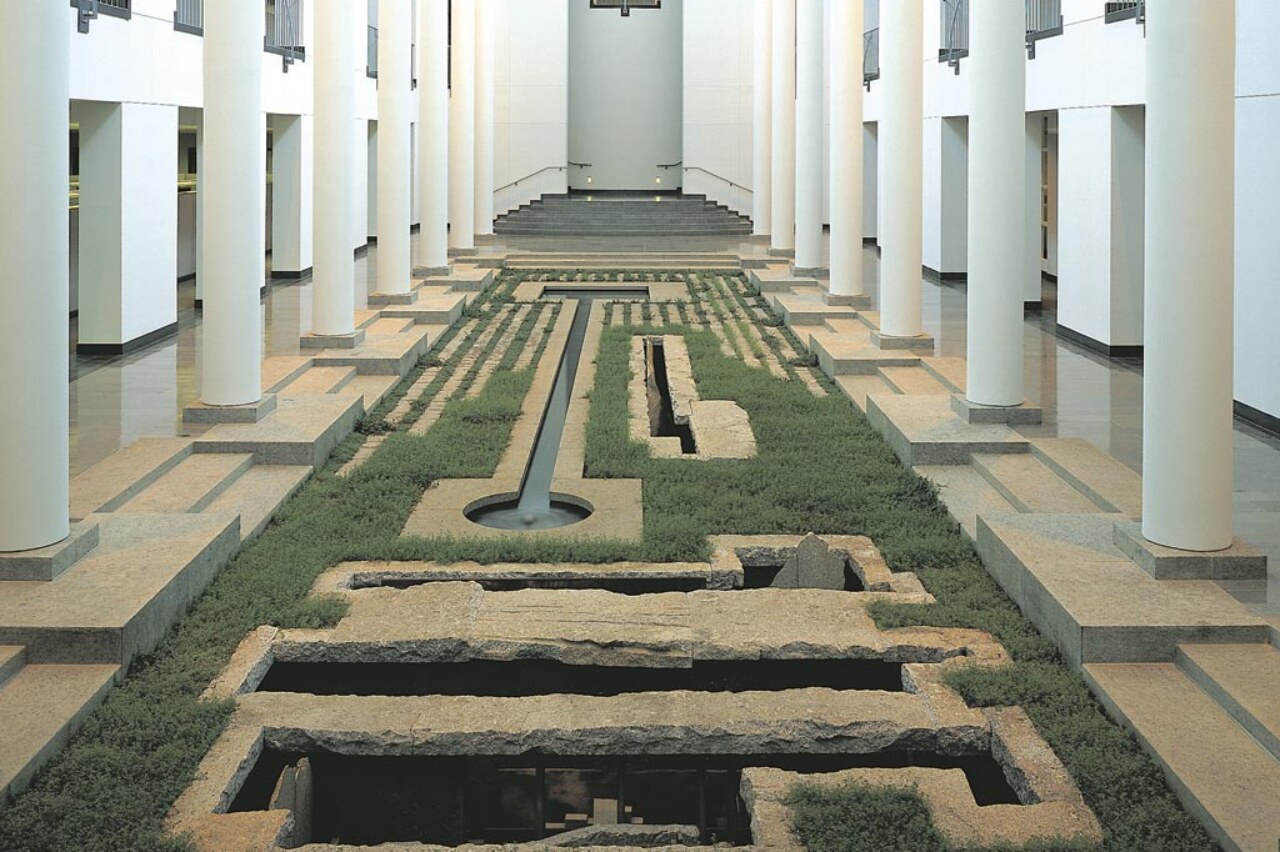
The Becton Dickinson Corporation commissioned Michael Singer to create the centerpiece of two interior atrium spaces at the new executive building on their corporate campus in Franklin Lakes. One of the atrium spaces was designed with a sculptural garden, the other with a series of sculptural pieces. Both atria were planned by the architect to be central light wells for the building, providing natural lighting for the core circulation space as well as the adjacent offices and gathering spaces. Upon entering the building there is a view of the central Atrium Garden and its linear water element which carries one’s view deeper into the space. Low dense ground cover blankets much of the sculpted ground plane, with several excavated shapes below the surface and around the fountain and water channel. These excavated areas contain different configurations of stone and wood forms. The garden may be viewed from the adjacent dining hall as well as from offices and walkways on the upper levels. The many viewpoints reveal different forms within the underground chambers. In the second atrium, which faces an outdoor courtyard, there is wood and stone sculpture Cloud Hands Ritual Series 1986, an etched copper tablet and an old quarry cart. The elements of the sculpture and etched copper plate reflect the larger forms seen in the sculptural garden atrium.

Alterra Atria Gardens

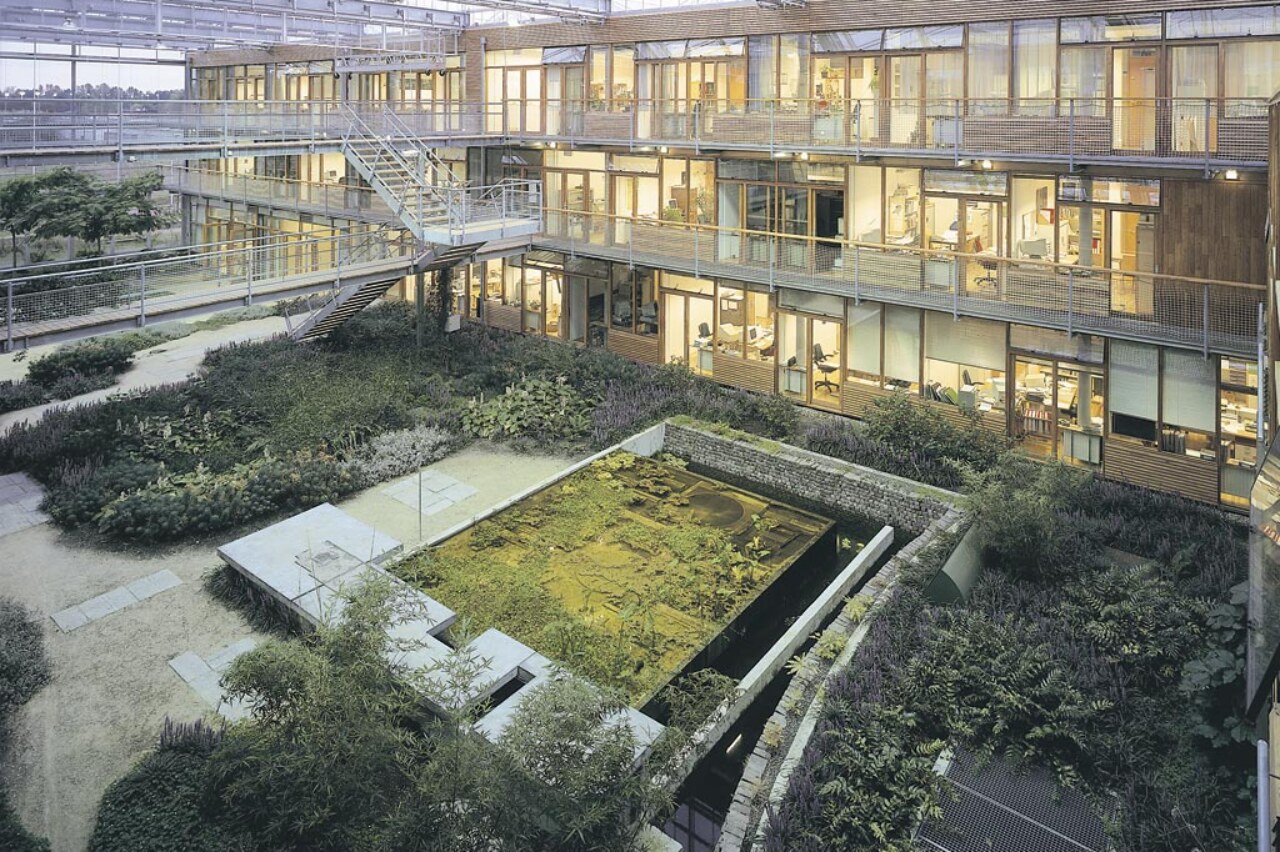
Alterra is the Dutch research institute for the environment and is an integral part of the Partnership for European Environmental Research. The institute focuses on interdisciplinary collaboration for sustainable development in balance with ecological systems. Michael Singer was selected as a part of a winning architectural team lead by Behnisch and Partner, to provide sculptural interactions with the building’s core environmental systems. Working closely with the project architecture team, Copijn landscape architects as well as the scientists and researchers that would ultimately occupy the building, Singer developed a series of sculptural spaces within the two core atriums of the building complex. The Alterra Atria Gardens function as the “lungs and kidneys” of the building complex, cleaning air and gray water as well as providing comfortable climate control. The process begins with stormwater, filtered through an exterior retention pond and constructed wetlands, which is then conveyed into the atria spaces. In the first atrium adjacent to the library the water moves through a series of pools and weirs with a range of aquatic and emergent vegetation and fish that continue the filtration process. Below the water’s surface these pools have a variety of sculpted layers and forms that provide shelter for fish and support vegetation requiring different depths of water. Water then flows into another smaller clarifying pool only slightly recessed below grade and composed of concrete elements connected to an adjacent sculpted garden shelter. From the first atrium the water is then conveyed into the second atrium for final cleansing. The sculpted pool in the second atrium has a large shallow-patterned concrete plate with water plants growing on its surface. The water slowly overtops the pool and drips into a deep cistern for storage and recycling in the building’s irrigation system and toilets. Singer’s design also provides research and experimentation sites within the garden for environmental scientists working for the institute.

Grand Rapids Sculptural Flood Wall

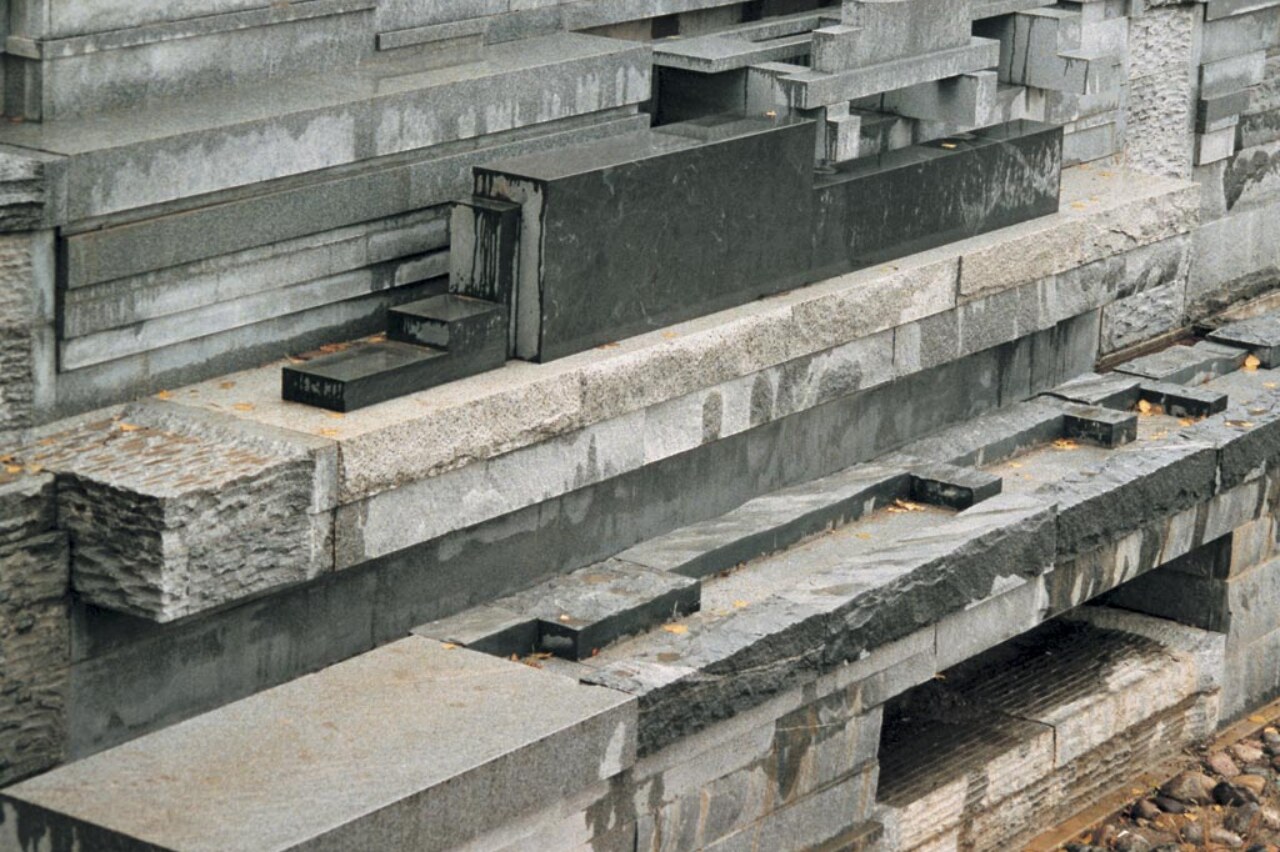
The City of Grand Rapids invited Michael Singer to propose a public artwork in a site of his choice within the city limits. Singer chose 600 feet of riverbank along the Grand River between the Blue Footbridge and the Fulton Street Bridge where he observed severe erosion of the river bank. Singer proposed a layered sculptural wall and keeping the existing mature cottonwood trees as an alternative to an Army Corps of Engineers' proposal for a sheer concrete floodwall and the removal of the trees along the riverbank. With the aid of city staff and his team engineers, Singer was able to realize a sculptural environmental regeneration project that restores the river’s edge in a manner that creates habitat and engages the public, while simultaneously meeting the necessary engineering requirements of a flood wall. The 300 foot layered sculptural element is comprised of granite, concrete and pockets of soil and vegetation. The sculptural wall functions as a flood wall while softening the river’s edge with native vegetation and creating small niches that shelter birds and other wildlife living along the river. The sculptural wall is reminiscent of stone foundations from an earlier time, emerging through the steep side of the riverbank. The indigenous plantings as well as the patina of the stone encourage associations with the past. The project also includes a fully accessible walkway to the river's edge to connect the public to this natural and historic place central to Grand Rapids. The Riverwalk Floodwall became a key precedent for further redevelopment of the river's edge and riverfront walkways in downtown Grand Rapids.

EcoTarium Ice and Water Wall

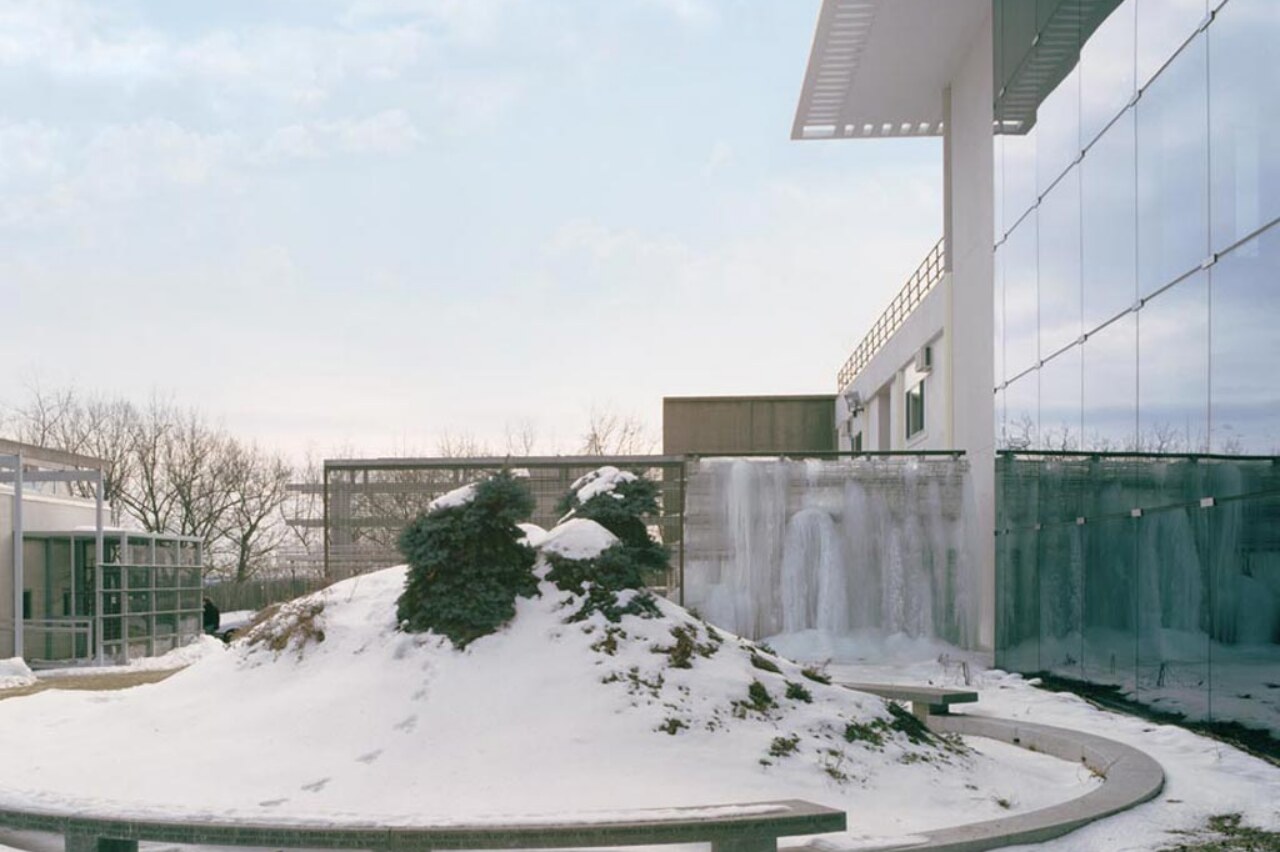
Worcester, Massachusetts Michael Singer was commissioned to provide a master plan for…
Sculptural Gardens Michael Singer Studio