logo
logo

Landscapes

Working with collaborative teams, Michael Singer Studio has created distinctive regenerative landscapes that integrate sculptural details, engage the public and reflect a deep sense of place and history. Below are some of examples of the larger public landscapes in the portfolio, while the smaller landscapes may be found in Sculptural Gardens and Interior Gardens.

Queens Plaza

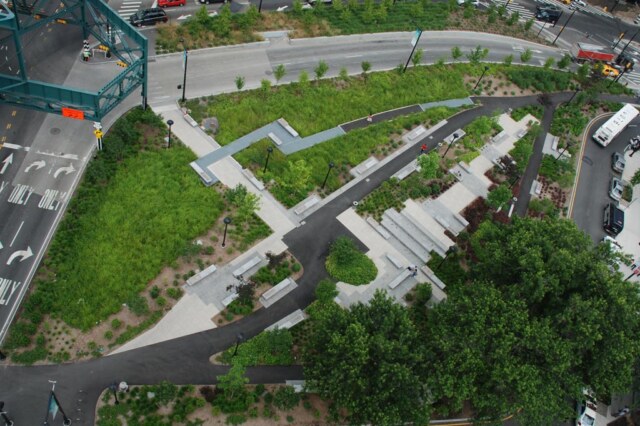
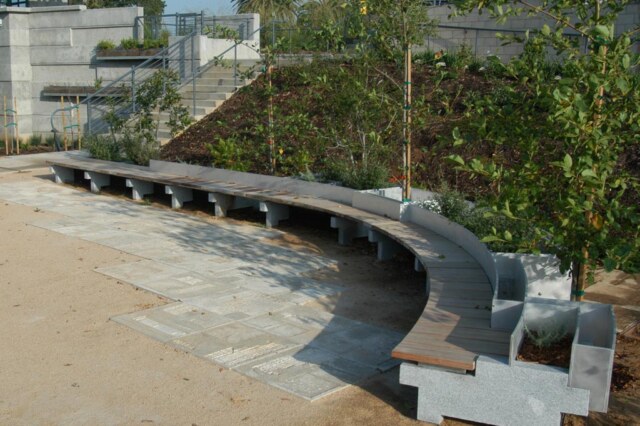
Michael Singer Studio ultimately created over 3000 individual sculptural paver, runnel and bench cap elements for Queens Plaza, which are dispersed throughout the core of the project site. The installation was completed in 2011. These elements create a sculptural tapestry and unite the project through pattern, texture, form and repetition. Some elements, such as the runnels and planted permeable paver groups, are an integral part of the stormwater cleansing system for the site.

The Scramble

The Scramble is a sculpted streetscape project that repurposes existing infrastructure into…

Living Docks

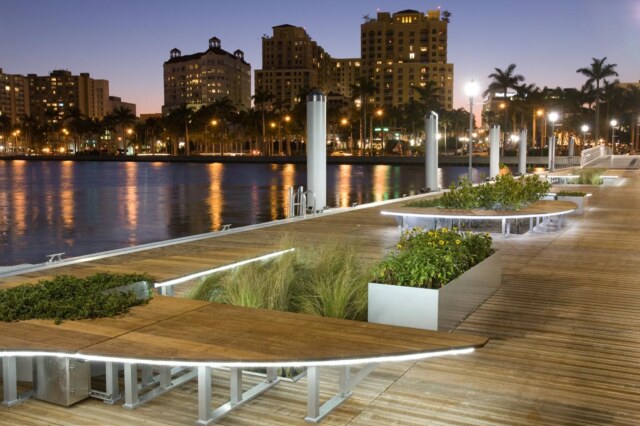
The West Palm Beach Waterfront Commons Project includes three new docks that allow for boat tie-ups and a water-taxi to encourage visitors to the downtown. The large central dock incorporates shaded seating areas and functions as a public event space. This innovative central dock is designed with in-water planters containing native mangroves, spartina grasses and a visible oyster reef set into the dock. Perhaps the first of its kind in the nation, the boat dock and promenade actually functions as a living system, filtering water and providing small pockets of habitat within an estuarine man-made structure. The three new docks were carefully designed to align with the annual West Palm Beach Boat Show layout in order to establish permanent circulation spines for the event. This consideration reduces the cost and environmental impact of establishing temporary docks for the Boat Show and other on-water events, and encouraged the Boat Show to contribute $1 million to the construction of the project. Significant grants for the project were also obtained from the Florida Inland Navigation District, accounting for another $4.25 million in funding. The docks, the first completed project area of the larger West Palm Beach Waterfront Project, won a Marine Industries Award in 2009 and has been covered in international journals.

Palm Beach Zoo Entry Plaza

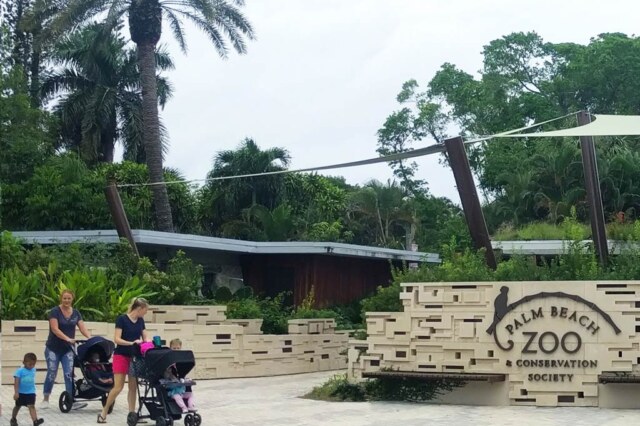
The new entry plaza was created to embody the Palm Beach Zoo…

West Palm Beach Waterfront

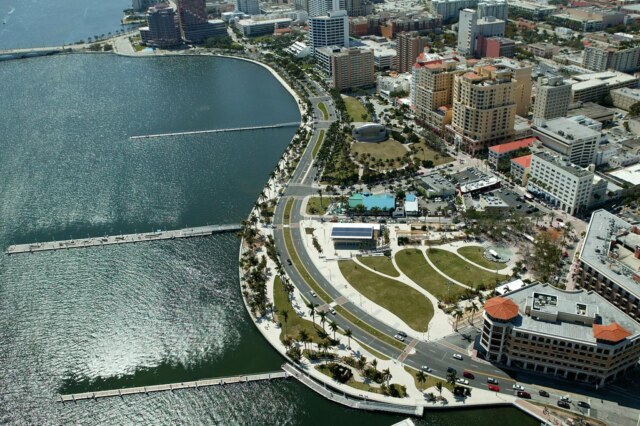
Michael Singer Studio was selected as a part of an integrated design team to lead the re-imagining and design of the new West Palm Beach Downtown Waterfront. The Waterfront is over a 1/2 mile long and encompasses over 12.5 acres along the Intracoastal Waterway. The new civic space revitalizes the City’s historic downtown and restores the natural beauty of West Palm Beach’s waterfront. The Studio designed the main commons and event spaces, 3 new floating docks, shaded gardens, two community buildings, a continuous waterfront esplanade, shade trellises, custom benches, 7 water elements and an estuarine ecological regeneration area known as the South Cove. The $30 million park (with $9 million of that coming from Federal, State and Local grants) opened in early 2010, with an estimated 80,000 people attending the grand opening celebration.

South Cove Regeneration Project

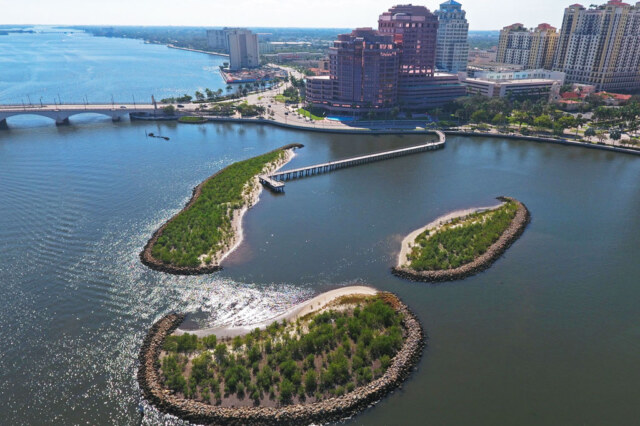
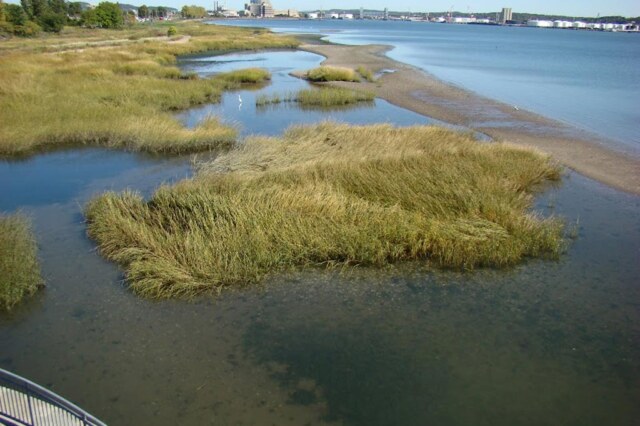
As a part of the West Palm Beach Waterfront Commons, Michael Singer Studio focused on regenerative environmental opportunities along the waterfront, specifically in the southern portion of the project area known as the South Cove. The Studio proposed a series of interventions that would act as a catalyst for regenerating the entire estuarine ecosystem within the South Cove. The Studio investigated regeneration projects along the Lake Worth Lagoon that were created as a part of the Lake Worth Lagoon Initiative and met with the Palm Beach County Department of Environmental Resource Management (PBC DERM) and other agencies to explore the most beneficial environmental strategies. Working with this research the Studio designed a series of stepped tidal gardens along the seawall, tidal islands of mangroves and spartina, and oyster reefs for water filtration, habitat enhancement and critically, to promote the growth of beneficial seagrasses. PBC DERM recognized the value of the conceptual work initiated by Michael Singer Studio and adopted the South Cove project as one of their own major projects as a part of the Lake Worth Lagoon Initiative. PBC DERM has adopted several elements of the original Michael Singer Studio design and advanced the project through engineering, permitting and construction. Utilizing 150,000 cubic yards of local fill material the project has filled a series of anoxic dredge holes (essentially in-water habitat dead zones) and shaped three distinct islands. The project area encompasses 2 acres of mangrove and spartina habitat, 3.5 acres of potential seagrass habitat and 0.9 acres of rock revetment/oyster reef. These habitats provide natural filtration (each oyster for instance filters 40-50 gallons of water a day) and improve water quality through stabilization of the sediments. PBC DERM has also constructed a 556 foot long elevated boardwalk, a 16 foot by 16 foot observation deck and an educational kiosk for public access to the South Cove.

Lake Worth Beach

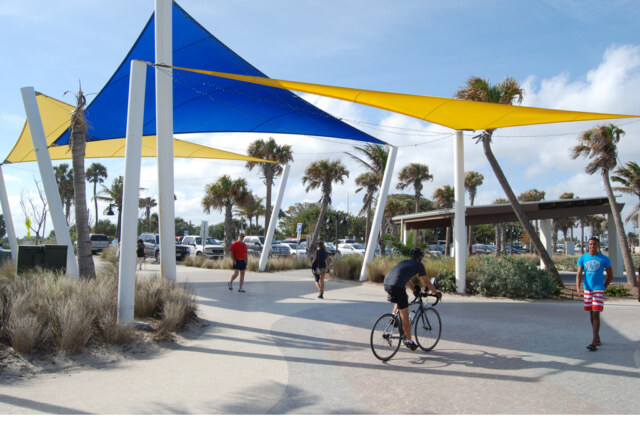
The innovative Lake Worth Beach design replaces large expanses of asphalt at the top of this rare and extraordinary public oceanfront with active and passive recreational areas and a regenerated landscape. Pedestrian and bicycle paths, native coastal vegetation, shaded overlooks and sea-turtle friendly lighting were designed along the eastern oceanfront promenade. The recreational landscape incorporates open-air pavilions and elements that harvest water (storing it in cisterns for re-use in the irrigation systems), generate energy for the park (wind turbines and solar generating shade structures), and offer space for special programs and public events. Bioswales and recycled permeable paving are designed to filter and infiltrate stormwater back into the ground throughout the project site. Highlighting the social and natural history of the site is a major feature of the park. The back slope of the site is enhanced as a native coastal hammock with a fully accessible pathway that interprets the ecological and archeological history of the area.

Phoenix Grand Canal

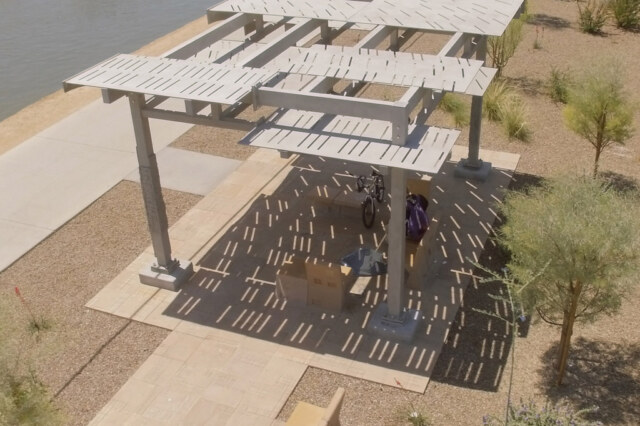
Singer Studio sculpted a range of elements for the Phoenix Grand Canal…

Caloosahatchee Water Wall

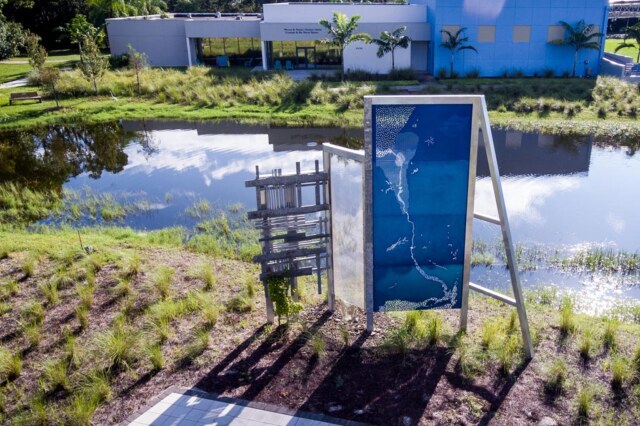
The Caloosahatchee Water Wall and the surrounding naturalized landscape were created together…

Long Wharf Park Master Plan

New Haven, Connecticut In 1988 New Haven, Connecticut initiated a Public Art…

Casa Nueva Courtyard Garden

Goleta, California Michael Singer was commissioned by the Arts Council of Santa…

Courthouse Security Barrier

West Palm Beach, Florida Michael Singer was selected through a competition to…

Tropical Gardens

Delray Beach, Florida Over the course of several years Michael Singer designed…

Paradise Creek Nature Park

The Elizabeth River Project (ERP) selected Michael Singer to work with Clough,…

Howard Park

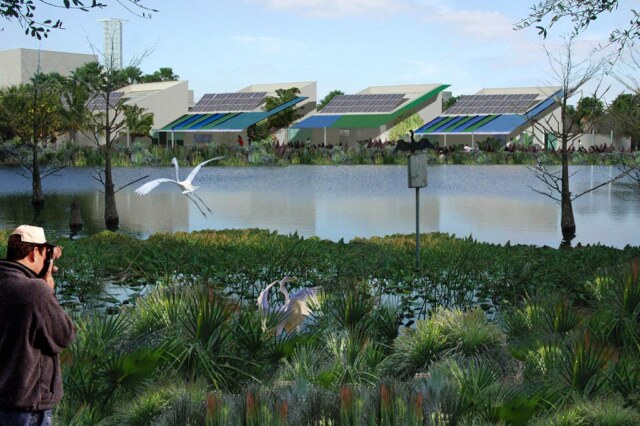
Imagining Howard Park showcases opportunities that create a sense of place specific to South Florida by transforming the existing mundane park into a place that celebrates the unique subtropical environment and its ever diversifying population. A key component of the design is a massive re-vegetation of the site with native plants to regenerate the land and create distinct spaces for serenity and discovery as well as discreet areas for recreational activity. The design also included concepts for urban gardening, a native plant nursery with a mobile distribution truck, generating power with solar pv shade canopies, a water filtering retaining wall and interconnected trails for pedestrians, bikes and canoes. The project design extended the park concepts to the Okeechobee Boulevard medians and explored connecting the park and the adjacent convention center to an outdoor mall to the north over the boulevard with an Orchid Bridge.

EcoTarium

Worcester, Massachusetts Michael Singer was commissioned to provide a master plan for…

FAU Transformations

Florida Atlantic University (FAU) Transformations is the result of a multi-year academic and professional collaborative process to re-envision the design and policies for landscapes throughout the campus beginning with the College of Arts and Letters. Michael Singer developed this program while he was the Dorothy F. Schmidt Eminent Scholar for the College of Arts and Letters at FAU as a part of his “Creative Thinking in the Public Realm” seminar. At the core of Transformations is a series of visual, scientific and engineering studies demonstrating the improvement of aesthetics, ecological health, water quality, biodiversity and comfort of naturalized landscapes and retention ponds on FAU’s campus. A series of conceptual designs focusing on regenerative design strategies were created for a number of campus courtyards, plazas and retention ponds. Over several years the project evolved in different ways, from engagement with the campus planning department to collaborations with engineering and business faculty and students. A proposal for a composting partnership with Whole Food Market Boca Raton (across the street) was developed to supplant chemical fertilizers on FAU's campus and save tens of thousands of dollars a year. Tobin Hindle a faculty member and PhD candidate at the time ultimately wrote his thesis on the Transformations project.

Canal Origins Park

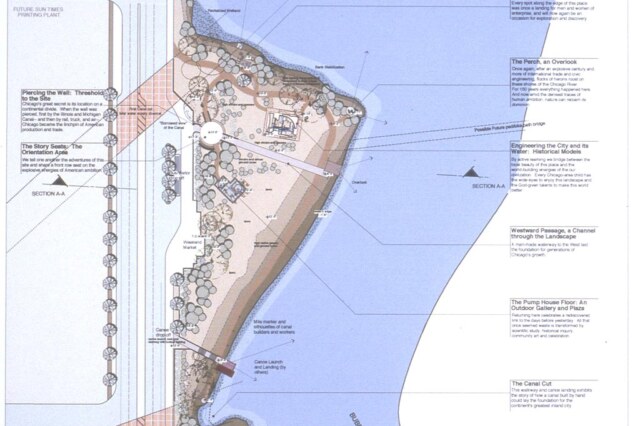
Chicago, Illinois The Chicago Parks District along with the Canal Corridor Association…
Landscapes Michael Singer Studio